Day: January 4, 2023

  • Cómo Evitar Anglicismos Innecesarios en Español

    Cómo Evitar Anglicismos Innecesarios en Español

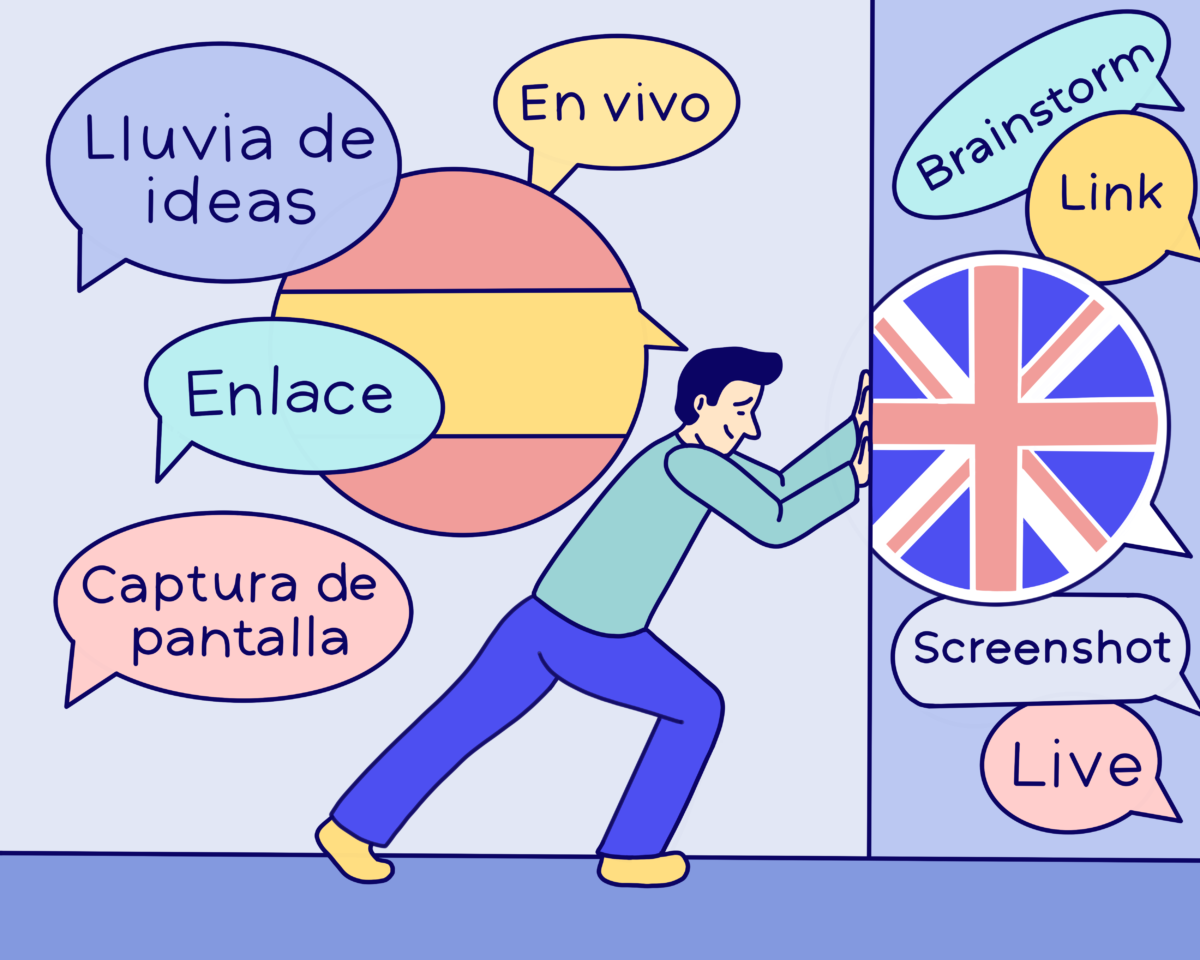
    ¿Sabes qué son los anglicismos? Según la RAE, un anglicismo es una palabra que se usa en inglés para expresar algo que podríamos decir en español. Por ejemplo: start-up en lugar de empresa emergente o remake en lugar de nueva versión o adaptación.

    Hoy en día, el uso de anglicismos está sobrevalorado y es, a menudo, totalmente innecesario en el discurso en español debido a que existen equivalentes en nuestra lengua. El uso indiscriminado de voces inglesas no solo impide la buena comprensión del texto, sino que altera el funcionamiento del español como lengua.

    Anglicismos aceptados por la RAE

    La RAE ha aceptado e incluido en el vocabulario español anglicismos que, por su uso, han pasado a formar parte de la lengua. Esto se produce por la misma evolución del idioma:

    Chat, plotear o candidatar.

    Al llegar al trabajo, enciendo el chat para hablar con mis compañeros.

    Hay otros anglicismos que han adaptado su grafía, como rugbi, pero que mucha gente sigue escribiendo rugby. En este caso, la RAE nos recomienda escribir la palabra en cursiva cuando, por cualquier motivo, se decida no adaptar.

    La RAE permite los anglicismos si el texto requiere su uso por las características que posee; por ejemplo, si está relacionado con la mercadotecnia o si es un texto técnico muy específico, el anglicismo irá en cursiva.

    Siempre que podamos, intentaremos introducir la palabra equivalente en español y el anglicismo entre paréntesis para que, a partir de ese momento, en el texto solo se incluya el equivalente en español.

    Por ejemplo:

    En Inglaterra, las escuelas se enfrentan a una ola de noticias falsas (fake news) que perjudican al alumnado. Estas noticias falsas están a la orden del día.

    Cómo evitar los anglicismos de moda

    Cuando te venga a la cabeza una palabra en inglés al hablar en español, párate y piensa si es necesario utilizar ese anglicismo. Seguro que existe una palabra en español que puedes emplear en su lugar.

    Por ejemplo, vamos a proponerte algunas alternativas en esta frase:

    NO:

    ¡Me has hecho un spoiler del final del capítulo!

    SÍ:

    ¡Me has fastidiado/destripado el final del capítulo!

    Si no te viene ninguna palabra en español, puedes utilizar las consultas rápida de la RAE o de la Fundéu, te aseguro que alguien ha tenido la misma duda antes que tú y la solución la tienes a tan solo un clic.

    Haz una lluvia de ideas (y no un brainstorming)

    El cerebro es un músculo y, como todo músculo, hay que entrenarlo para que se acostumbre y haga las tareas sin esfuerzo. Con esta teoría puedes evitar el uso de anglicismos innecesarios en el español.

    Habla, párate, piensa y utiliza palabras alternativas. Si estas escribiendo, recuerda que iScribo detecta los anglicismos innecesarios y te propone alternativas para que puedas escribir un español correcto. Esta también es una manera infalible de aprender. ¿Qué anglicismos de moda crees que están más integrados en el español? Cuéntanos en los comentarios.

  • Best Way to Avoid Anglicisms in the Spanish Language

    Best Way to Avoid Anglicisms in the Spanish Language

    Do you know what anglicisms are? According to the RAE, an anglicism in Spanish is a word that is used in English to express something that could be said in Spanish. For example, start-up instead of ‘empresa emergente’ or remake instead of ‘nueva versión’or ‘adaptación’.

    Nowadays, the use of anglicisms is overrated and is often totally unnecessary in Spanish discourse because there are equivalents in this language. The indiscriminate use of English voices not only impedes the proper understanding of the text but also alters the functioning of Spanish as a language.

    Anglicisms Accepted by the Spanish RAE

    The RAE has accepted and included in the Spanish vocabulary anglicisms that, due to their use, have become part of the language. This is due to the evolution of the language itself:

    Chat, plotear or candidatar

    Al llegar al trabajo, enciendo el chat para hablar con mis compañeros.

    (When I get to work, I sign in the chat to talk to my colleagues.)

    There are other anglicisms that have adapted their spelling, such as ‘rugbi’, but many people still write rugby. In this case, the RAE recommends that we write the word in italics when, for whatever reason, we decide not to adapt it.

    The RAE allows anglicisms if the text requires their use due to its characteristics, for example if it is related to marketing or if it is a very specific technical text, the anglicism will be in italics.

    Whenever possible, we will try to introduce the equivalent word in English and the anglicism in brackets so that, from then on, only the English equivalent is included in the text.

    For example:

    En Inglaterra, las escuelas se enfrentan a una ola de noticias falsas (fake news) que perjudican al alumnado. Estas noticias falsas están a la orden del día.

    (In England, schools are facing a wave of fake news that harms pupils. Fake news is the order of the day.)

    How to Avoid Anglicisms

    When an English word comes to mind when speaking in Spanish, stop and think about whether it is necessary to use that anglicism. Surely there is a Spanish word you can use instead.

    For example, we are going to suggest some alternatives in this sentence:

    NO:

    ¡Me has hecho un spoiler del final del capítulo!

    (You gave me a spoiler for the end of the chapter!)

    YES:

    ¡Me has fastidiado/destripado el final del capítulo!

    If you can’t find any Spanish words, you can use the quick search tool of the RAE or the Fundéu, I assure you that someone else has had the same doubt before you and the solution is just a click away.

    Make a ‘lluvia de ideas’ (and not a brainstorming)

    The brain is a muscle and, like any muscle, you have to train it to get used to it and to make it perform tasks effortlessly. With this theory, you can avoid the use of unnecessary anglicisms in Spanish.

    Speak, stop, think and use alternative words. If you are writing, remember that iScribo detects unnecessary anglicisms and suggests alternatives so that you can write correct Spanish. This is also a sure-fire way to learn. Which anglicisms in the Spanish language do you think are more integrated into this language? Tell us in the comments.

Want more Spanish tips?

Get them direct to your inbox

Sign up for tips and tricks to perfect your Spanish writing skills. You’ll be writing like a native in no time.

Free Trial until 30 September 2021: Our subscription programme does not start until 1 October 2021. So, as long as you provide us with a feedback you can use our site for free until noon 30 September 2021 (GMT)