Day: April 5, 2023

  • Las Reglas de Formación del Plural en Español

    Las Reglas de Formación del Plural en Español

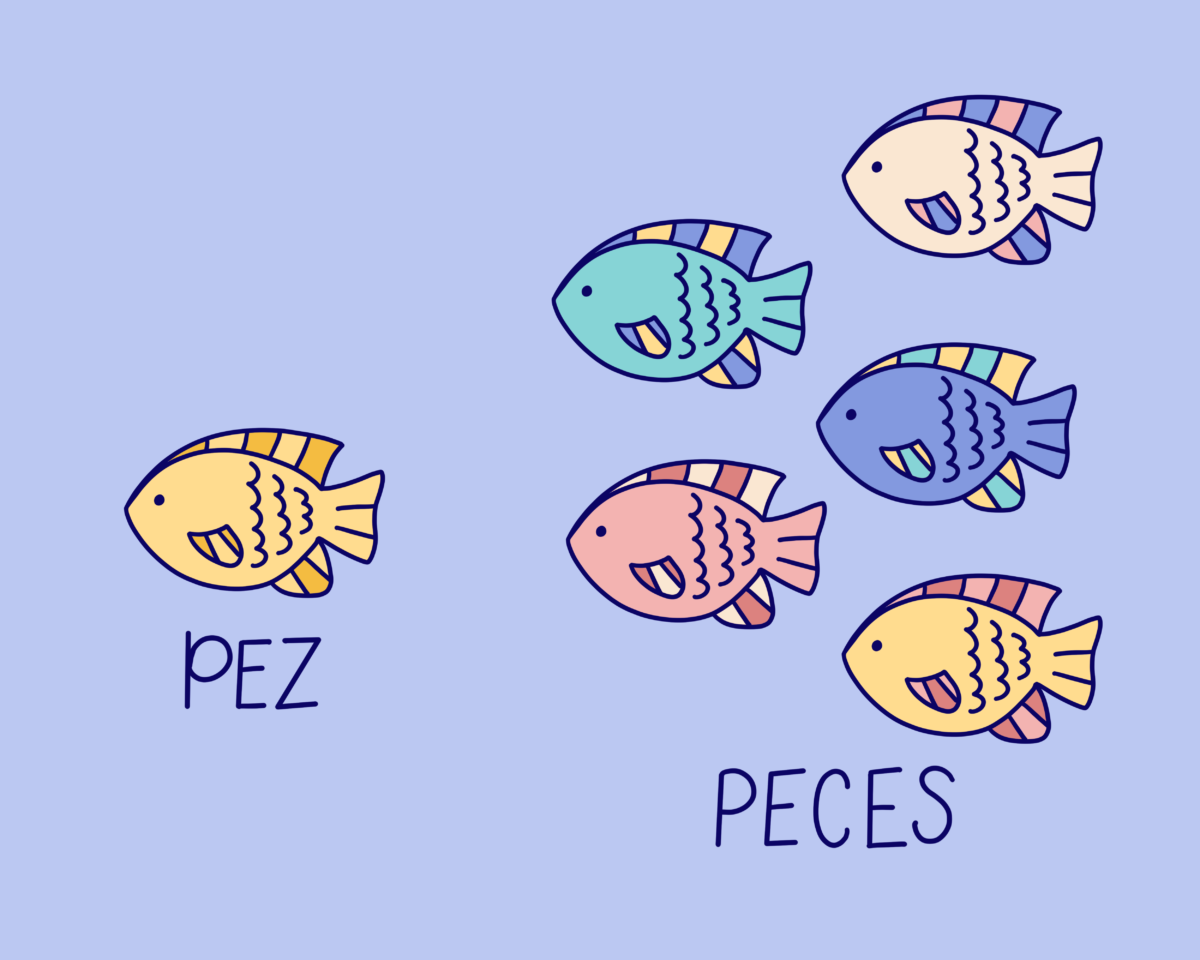
    La formación del plural en español sigue una regla básica que consiste en añadir una -s al final de la palabra:

    Casa – casas

    Gato – gatos

    Sin embargo, existen palabras que, por su formación, también siguen unas reglas de formación del plural en español un tanto diferentes. Se trata de las palabras que acaban en -s, -y o -z. Continúa leyendo para aprenderlas.

    Plural de palabras que acaban en s o x

    La formación del plural dependerá de la longitud de la palabra:

    1. Si la palabra es monosílaba o polisílaba pero aguda, añade -es:

    vals – valses

    inglés – ingleses

    2. Si no se trata de una palabra polisílaba aguda, el plural es invariable:

    crisis – crisis

    pasapurés – pasapurés

    Plural de y

    Las palabras que terminan en -y son muy frecuentes en el español. La formación del plural atiende a tres posibles escenarios:

    1. Si la -y va precedida de vocal, el plural se forma añadiendo -es. En estos casos, la -y adquiere un carácter de consonante:

    buey – bueyes

    ley – leyes

    2. Evidentemente, existe una excepción. Se trata de las palabras extranjeras que hemos incorporado al repertorio del vocabulario en español. Para estas palabras, transformamos la -y en -i y añadimos la -s al final ya que la -y mantiene el carácter de vocal:

    jersey – jerséis

    gay – gais

    3. Hoy estás de suerte, hay algunas palabras que admiten la formación de ambos plurales, así que no hay posibilidad de error:

    guirigay – guirigáis/guirigayes 

    estay – estáis/estayes

    ¿Qué ocurre si la -y va precedida de consonante? Se trata de extranjerismos que sí cuentan con una grafía adaptada, por tanto, la formación del plural sigue las reglas básicas del plural en español:

    dandi – dandis

    ferri – ferris

    Plural de palabras terminadas en z

    1. Si la -z va precedida de vocal, cambia a –c y se añade –es:

    cáliz – cálices

    2. Los extranjerismos también siguen la misma regla:

    interfaz – interfaces

    La RAE y las reglas básicas del plural en español

    La formación del plural es clara y concisa, pero existen reglas que debes interiorizar para no equivocarte nunca. Como siempre, la mejor manera de aprenderlas es acudir a la RAE. Otra forma de cultivarse es escribir sin parar en un corrector ortográfico y gramatical en español para aprender en tiempo real a la vez que practicas. iScribo está aquí para ayudarte, ¿lo has probado ya? ¿Qué palabras te suponen un problema a la hora de practicar la formación del plural en español? Cuéntanos en los comentarios.

  • Rules for Forming the Plurals of Words in Spanish

    Rules for Forming the Plurals of Words in Spanish

    The formation of the plural in Spanish follows a basic rule which consists of adding an -s to the end of the word:

    casa – casas (house)

    gato – gatos (cat)

    Nevertheless, there are words which, due to their formation, follow other rules for plurals in Spanish. We are talking about the words ending in -s, -y or -z. Continue reading to learn them.

    Plurals of Words Ending in S or X

    The rules for forming the plurals depend on the length of the word:

    1. If the word is monosyllabic or polysyllabic but acute, add -es:

    vals – valses (waltz)

    inglés – ingleses (English)

    2. If it is not a polysyllabic acute word, the plural is invariable:

    crisis – crisis (crisis)

    pasapurés – pasapurés (food processor)

    Rule for Plurals Ending in Y

    Words ending in -y are very frequent in Spanish. There are 3 rules of the plural in Spanish for these kinds of words:

    1. If -y is preceded by a vowel, the plural is formed by adding -es. Here, you can see that the -y performes the role of a consonant:

    buey – bueyes (ox)

    ley – leyes (law)

    2. There is, of course, one exception. These are the foreign words that we have incorporated into the Spanish vocabulary repertoire. For these words, we transform the -y into -i and add the -s at the end as the -y remains as a vowel:

    jersey – jerséis (jumper)

    gay – gais (gay)

    3. Today is your lucky day! There are some words that allow the formation of both plurals, so there is no possibility for you to be mistaken:

    guirigay – guirigáis/guirigayes (noise, chaos)

    estay – estáis/estayes (backstay)

    What happens if the -y is preceded by a consonant? These are foreign words that do have an adapted spelling in Spanish, so their plural formation follows the basic rules of the plural in Spanish:

    dandi – dandis (dandy)

    ferri – ferris (ferry)

    Plural of Words Ending in Z

    1. If the -z is preceded by a vowel, it changes to -c and -es is added:

    cáliz – cálices (goblet)

    2. Foreign words also follow the same rule (so this is an easy one!):

    interfaz – interfaces (interface)

    The RAE and the Basic Rules for Forming the Plurals

    The rules for forming the plurals are clear and concise, the only thing you have to do is to learn them so that you never make a mistake. As always, the best way to know them is to check the RAE channels.      Another way to cultivate yourself is to write non-stop in a Spanish spelling and grammar checker to learn in real time while you practice. iScribo is here to help you, have you tried it yet? Which words are more difficult for you when it comes to practising the formation of the plural in Spanish? Let us know in the comments.

Want more Spanish tips?

Get them direct to your inbox

Sign up for tips and tricks to perfect your Spanish writing skills. You’ll be writing like a native in no time.

Free Trial until 30 September 2021: Our subscription programme does not start until 1 October 2021. So, as long as you provide us with a feedback you can use our site for free until noon 30 September 2021 (GMT)