Day: March 13, 2024

  • El spanglish. La influencia de un gigante

    El spanglish. La influencia de un gigante

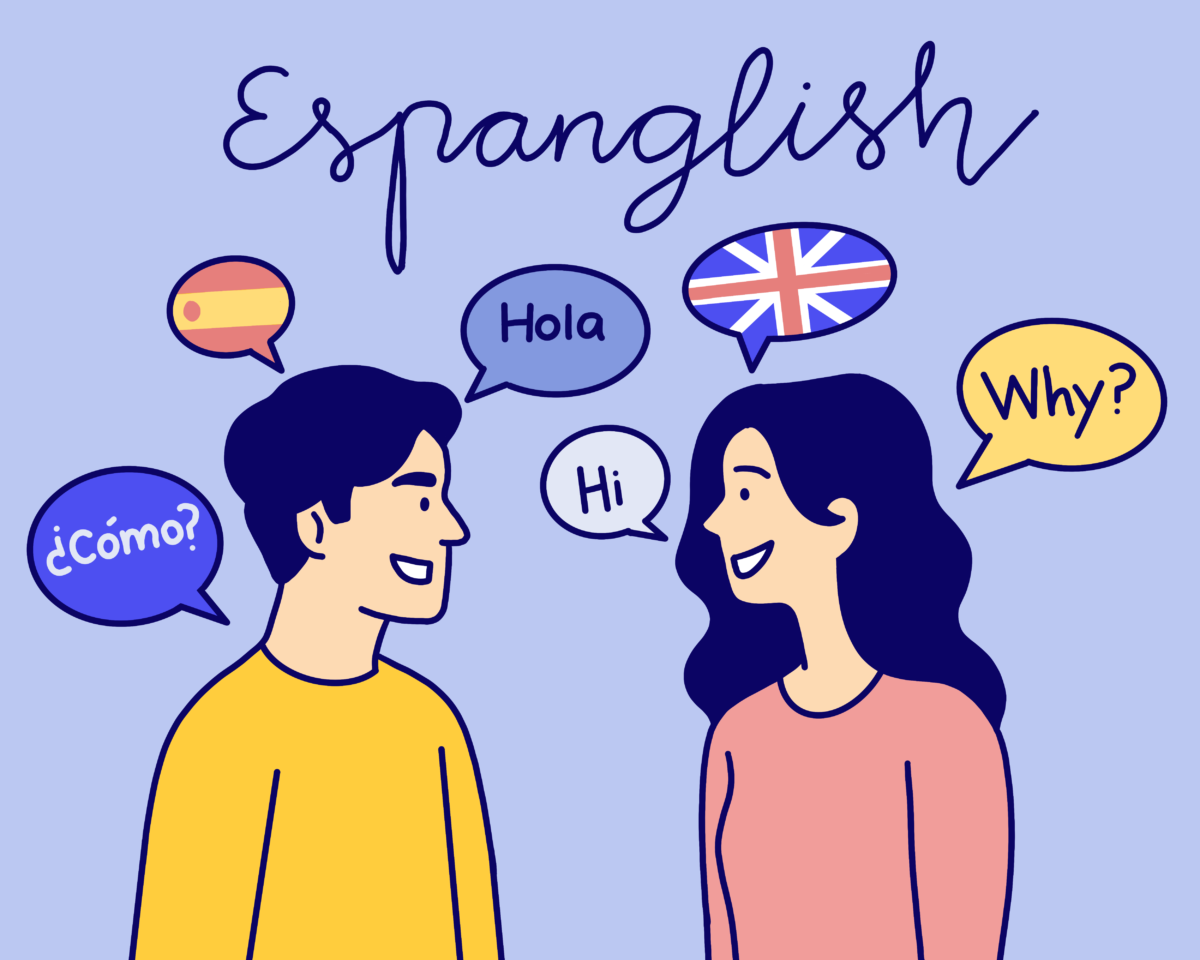
    ¿Estás ready para leer este artículo? Sí, I know que a veces puede ser hard pero vamos a entender un poco qué es esto del espánglish o spanglish.

    El spanglish es como coloquialmente se conoce a ciertas variedades del castellano no estándar que se hablan en Norteamérica, en contextos en los que el español y el inglés están en contacto prolongado debido al bilingüismo grupal.

    El castellano y el inglés son dos idiomas ampliamente hablados en el mundo, y aunque estas dos lenguas se estudian y hablan separadamente, no podemos ignorar un fenómeno sociolingüístico que ocurre cuando hablantes bilingües del inglés y el español interactúan. Ellos no siempre optan por llevar la conversación puramente en español o en inglés, sino que eligen una tercera vía: el spanglish.

    Puede gustarte o no, pero ahí está. Un híbrido entre el inglés y el castellano que los lingüistas no saben muy bien cómo clasificar. No existen reglas; puede parecer un español con muchos anglicismos entre frases o un inglés con muchas palabras en español entrelazadas. Para algunos lingüistas se trata simplemente de una alternancia de códigos, como cuando se pasa de un dialecto a una lengua estándar o como cuando se habla la lengua formal y luego se pasa a un uso más informal de la misma. En muchos sectores suele molestar, para algunos es una muestra de bajo nivel cultural, otros dicen que demuestra cómo el lenguaje está en constante creación. Otros observan el fenómeno atento y sin juicio, pero comencemos por el principio: ¿cuándo se comenzó a hablar así?

    ¿Cuándo la gente comenzó a hablar spanglish?

    El origen del spanglish se puede ver en las primeras interacciones entre los exploradores españoles y los pueblos indígenas de América, y más tarde, durante la colonización española del suroeste de Estados Unidos, la guerra entre México y Estados Unidos y la anexión de territorios como Texas y California. Luego, en el siglo XX, el aumento de la migración y el intercambio cultural entre inmigrantes de habla hispana y comunidades de habla inglesa, particularmente en áreas urbanas, impulsó aún más el desarrollo del espanglish. Esto fue especialmente cierto en familias donde la primera generación no hablaba inglés, pero sus hijos sí.

    Fue el escritor puertorriqueño, Salvador Tió, quien en 1948 empleó por primera vez el término espanglish en un artículo titulado “Teoría del espanglish”, publicado el 28 de octubre en el Diario de Puerto Rico. En él hacía referencia a los hablantes nativos del español que renegaban de su lengua materna para aprender inglés e inmigrar a países no hispanos.

    En la actualidad la influencia del espanglish en la cultura popular se ve reflejada en las redes sociales, la música y el cine, sobre todo en las generaciones más jóvenes, donde tiene gran aceptación.

    Chicano, Tex-mex y Cubonics: living la vida loca

    Los lugares en los que es más común hablar spanglish son aquellos de Estados Unidos con una amplia población de latinos. Por esta razón, el sur de California y Puerto Rico son los principales puntos de acceso del spanglish.

    ¿Recuerdas la canción de Ricky Martin “Living la vida loca”? Bueno, eso es spanglish. Y Ricky Martin es puertorriqueño, ¿ahora todo tiene sentido, no es cierto?

    Muchas veces se habla de inglés chicano para referirse al dialecto del inglés que hablan estadounidenses de origen mexicano. Dentro de éste está la variante texana, que se habla principalmente en el sur de Texas. Aunque igualmente se utilizan estos términos para referirse al spanglish que se habla en estas zonas geográficas, el cual se diferencia, por ejemplo, de aquel desarrollado por cubanos americanos que residen en Miami, cuyo spanglish habitualmente se conoce como lengua Cubonics.

    ¿Tú que piensas del spanglish? ¿Crees que es posible que en algún momento el inglés y el español se fundan totalmente en una sola lengua y el spanglish sea finalmente una lengua reconocida? ¿Te gustaría que eso ocurriera? Comparte con nosotros qué opinas de este fenómeno lingüístico, si te gusta o no y si eres usuario. Queremos conocer tu opinión.

    El spanglish existe. Eso es un hecho, pero ahora seguimos teniendo el inglés y el castellano, también. Así que si quieres mejorar tu escritura en español aprovecha iScribo, nuestra excelente herramienta de corrección ortográfica y gramatical. ¡No te arrepentirás!

    Hasta la vista, baby.

  • Spanglish. The influence of a giant

    Spanglish. The influence of a giant

    Estás ready to read this article? Yes, I know that sometimes it can be hard but let’s understand un poco about what Spanglish or espanglish is.

    Spanglish is how some non-standard Spanish spoken in North America are colloquially known in contexts where Spanish and English are in prolonged contact due to group bilingualism.

    Spanish and English are two widely spoken languages worldwide. Although these two languages are studied and spoken separately, we cannot ignore a sociolinguistic phenomenon that occurs when bilingual speakers of English and Spanish interact. They do not always choose to conduct the conversation purely in Spanish or English but rather choose a third way: Spanglish.

    You may like it or not, but here there is. A hybrid between English and Spanish that linguists don’t know how to classify. There are no rules; It may seem like Spanish with many anglicisms between sentences or English with many Spanish words intertwined. For some linguists, it is simply code-switching, such as switching from a dialect to a standard language or when speaking the formal language and then switching to a more informal use. In many sectors, it tends to bother; for some, it is a sign of a low cultural level, while others say it shows how language is in constant creation. Others observe the phenomenon attentively and without judgment, but let’s start at the beginning: when did people start talking like this?

    When did people start speaking Spanglish?

    The origin of Spanglish can be seen in the early interactions between Spanish explorers and the indigenous people of the Americas, and later, during the Spanish colonisation of the southwestern United States, the Mexican- American War, and the annexation of territories such as Texas and California. Then, in the 20th century, increased migration and cultural exchange between Spanish-speaking immigrants and English-speaking communities, particularly in urban areas, further boosted the development of Spanish. This was especially true in families where the first generation did not speak English, but their children did.

    The Puerto Rican writer Salvador Tió used the term Spanglish for the first time in an article titled “Teoría del Spanglish”, published on October 28, 1948, in the Diario de Puerto Rico. There, he referenced native Spanish speakers who renounced their mother tongue to learn English and immigrate to non-Hispanic countries.

    Currently, Spanglish’s influence on popular culture is reflected in social networks, music, and cinema, especially among the younger generations, where it is widely accepted.

    Chicano, Tex-mex and Cubonics: living la vida loca

    The places where it is most common to speak Spanglish are those in the United States, where there is a large population of Latinos. For this reason, Southern California and Puerto Rico are significant hotspots for Spanglish.

    Do you remember Ricky Martin’s song “Living la vida loca”? Well, that’s Spanglish. And Ricky Martin is Puerto Rican; it all makes sense now, right?

    Chicano English is often used to refer to the dialect of English spoken by Americans of Mexican origin. Within this is the Texan variant, which is spoken mainly in southern Texas. However, these terms are also used to refer to the Spanglish spoken in these geographical areas, which differs, for example, from that developed by Cuban Americans residing in Miami, whose Spanglish is usually known as the Cubonics language.

    What do you think of Spanglish? Is it possible that English and Spanish will merge into a single language and Spanglish will finally be recognised? Would you like that to happen? Share with us what you think of this linguistic phenomenon, whether you like it or not and if you are a user. We would want to know what you think.

    Spanglish exists -that is a fact- but we still have English and Spanish. So, if you want to improve your writing in Spanish, take advantage of iScribo, our excellent spelling and grammar correction tool. You will not regret it!

    Hasta la vista, baby.

Want more Spanish tips?

Get them direct to your inbox

Sign up for tips and tricks to perfect your Spanish writing skills. You’ll be writing like a native in no time.

Free Trial until 30 September 2021: Our subscription programme does not start until 1 October 2021. So, as long as you provide us with a feedback you can use our site for free until noon 30 September 2021 (GMT)