Day: April 4, 2024

  • Metátesis: murciégalo, cocreta y cocodrilo. ¿Son realmente palabras erróneas?

    Metátesis: murciégalo, cocreta y cocodrilo. ¿Son realmente palabras erróneas?

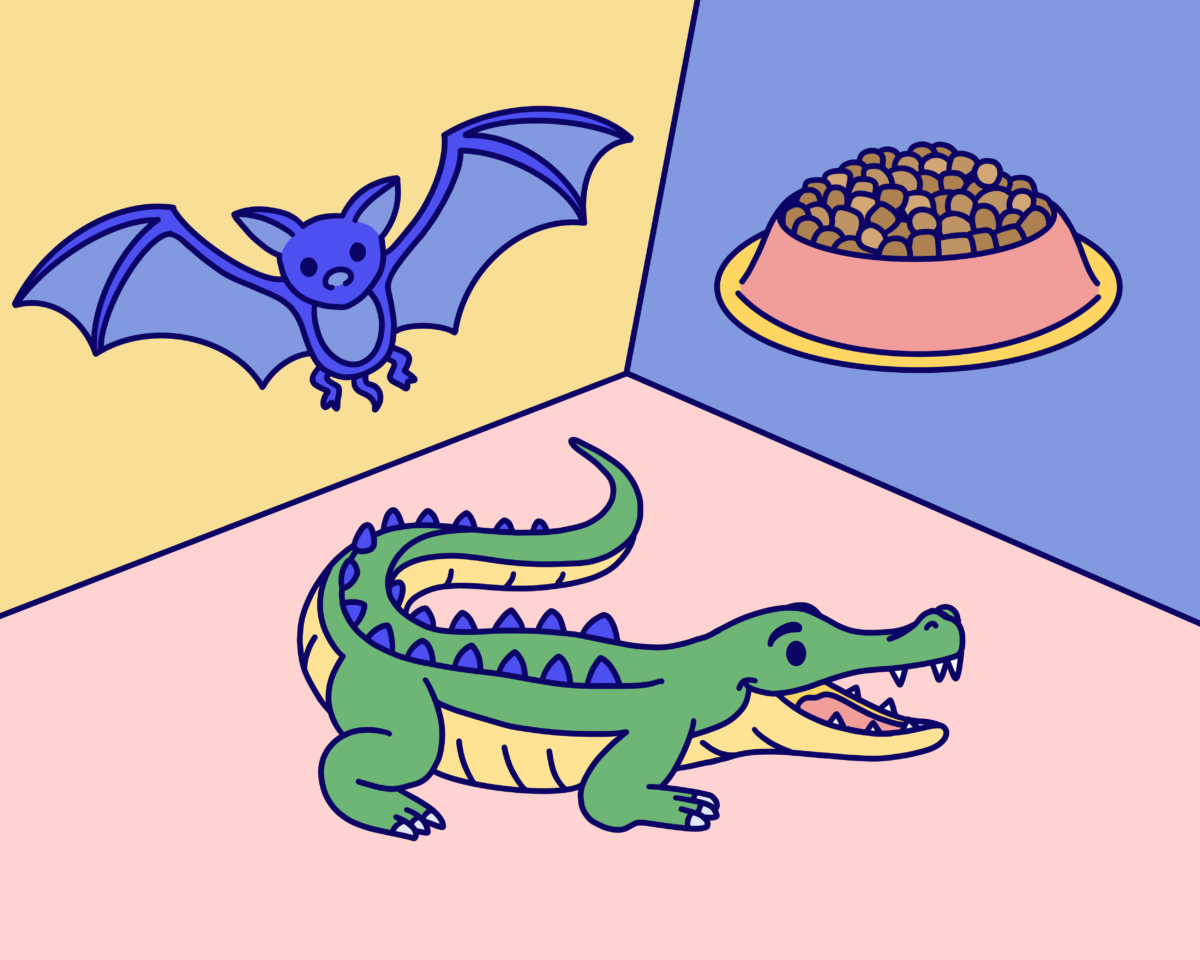
    Cuando los niños cuya lengua materna es el castellano comienzan a hablar, es bastante habitual que comentan errores como decir murciégalo en lugar de murciélago o cocreta en lugar de croqueta, ¿te suena, no es cierto? Estos errores son las llamadas metátesis, que corresponden a cuando se cambia de lugar el sonido dentro de una palabra. Pero qué pasa si te digo que en realidad esos niños no están equivocados. ¿Te toma por sorpresa? Seguro que sí.  

    Veamos el ejemplo de murciégalo. En el diccionario actual figura esta palabra como variante de murciélago, aunque es percibida como vulgar. Sin embargo, el término originario es precisamente murciégalo, pues deriva de las voces latinas mus, muris (ratón) y caecúlus, un diminutivo de caecus (ciego). En este caso, la metátesis original: murciélago se documenta desde el siglo XIII y no tardó en pasar a la lengua culta. De hecho, el primer diccionario académico recoge, ya en 1734, las dos variantes. Pero este no es el único caso.

    Hay muchas palabras del castellano que deben su forma actual al fenómeno de metátesis. Otro caso representativo es el de cocodrilo, el cual está corrompido de crocodrilo (otro clásico “error” que cometen los niños). Se parece al inglés crocodile y al igual que en el caso de murciégalo, fue el término etimológico el que terminó perdiéndose por culpa de una metátesis. La voz latina original era crocodilus, derivada del griego krokódeilos, de króke (canto rodado, guijarro) y drilos (gusano, lombriz). Hay que decir que en este caso la metátesis ya se empleaba en el latín medieval donde se hacía referencia a cocodrillus.

    Peligro es otra palabra que ha sufrido el cambio del orden de sus sonidos y la aceptación de éste. Peligro proviene del latín pericùlum.  Esta voz debería haber evolucionado a periglo, variante que está documentada hasta el siglo XVI. Con milagro sucedió algo muy similar; esta palabra proviene de miraglo. Otros casos son guirnalda, cuya palabra inicialmente era guirlanda o Argelia, que al igual que en inglés se decía inicialmente Algeria.

    En el habla popular, la metátesis ha dado origen a palabras como dentrífico, utilizada equivocadamente en lugar de dentífrico, del latín denifrícum, que a su vez deriva de las voces latinas dens, dentis (diente) y fricare (frotar).

    Cuando el error del error es lo correcto

    Si lo pensamos bien, muchas de las metátesis que los niños de hoy cometen, son en realidad las voces originales derivadas del latín. Es decir, probablemente, en algún momento se retorne a la voz original si es que, tal como pasó anteriormente, la voz vulgar o el error es aceptado como parte del habla culta.

    El error del error parece ser el retorno al origen etimológico de estas palabras. Una vuelta de varios siglos para volver al mismo lugar, pero con un recorrido interesantísimo, ¿no te parece?

    Así que, si tienes hijos, y dicen crocodilo o murciégalo, recuerda que en realidad no están del todo equivocados y que son ellos quienes se acercan más al origen de la palabra en latín. Muy probablemente no sean capaces de hacer referencia al origen etimológico de palabra, gracias a lo que acabas de aprender hoy, quizás tú sí puedas hacerlo.

    Sigue conociendo más curiosidades del lenguaje y de la lengua castellana, visitando y leyendo los distintos artículos que semana a semana publicamos en el blog de iScribo. Y si buscas mejorar tu escritura en español y corregir alguna variante específica de este idioma, no olvides suscribirte a nuestro maravilloso corrector gramatical. ¡Te esperamos!

  • Metathesis: Murciégalo, cocreta y cocodrilo. Are they actually mistaken words?

    Metathesis: Murciégalo, cocreta y cocodrilo. Are they actually mistaken words?

    When children whose mother tongue is Spanish begin to speak, it is standard for them to make mistakes such as saying murciégalo instead of murciélago (bat) or cocreta instead of croqueta (croquette). Does that sound familiar to you? These errors called metatheses, correspond to when the sound changes places within a word. But what if I told you that those children are not wrong? Does it take you by surprise? For sure, yes.

    Let’s look at the example of a murciégalo. In the current dictionary, this word appears to be a variant of murciélago, although it is perceived as vulgar. However, the original term is precisely murciégalo, as it derives from the Latin voices mus, muris (mouse) and caecúlus, a diminutive of caecus (blind). In this case, the original metathesis, murciélago, has been documented since the 13th century and soon passed into the cultured language. The first academic dictionary included, already in 1734, the two variants. But this is not the only case.

    Many Spanish words owe their current form to the phenomenon of metathesis. Another representative case is cocodrilo, which is corrupted by crocodrilo (another classic “mistake” children make). It resembles the English word crocodile, and, as in the case of murciégalo, the etymological term that ended up being lost due to a metathesis. The original Latin word was crocodilus, derived from the Greek krokódeilos, from króke (pebble) and drilos (worm). It must be said that in this case, metathesis was already used in medieval Latin, where reference was made to crocodillus.

    Peligro is another word that has undergone a change in the order of its sounds and the acceptance of this. Peligro (danger) comes from the Latin pericùlum. This voice should have evolved into periglo, a variant that was documented until the 16th century. Something similar happened with milagro (miracle); This word comes from miraglo. Other cases are guirnalda (garland), whose word was initially guirlanda, or Algeria, which, like in English, was initially said Algeria.

    In popular speech, metathesis has given rise to words such as dentrífico, mistakenly used instead of dentífrico, from the Latin denifrícum, which in turn derives from the Latin words dens, dentis (tooth) and fricare (rub).

    When the error of the error is the right thing

    If we think about it, many of today’s metatheses children make are the original voices derived from Latin. That is, the original voice will probably be returned if, as happened previously, the vulgar voice or error is accepted as part of educated speech.

    The error of the error seems to be the return to the etymological origin of these words. A journey of several centuries to return to the same place, but with a very interesting route, don’t you think?

    So, if you have children, and they say crocodilo or murciégalo, remember that they are not completely wrong and that they are the ones who are closest to the origin of the word in Latin. Most likely they will not be able to refer to the etymological origin of the word, thanks to what you just learned today, perhaps you can do it.

    Keep learning curiosities about the language and the Spanish language, visiting and reading the articles we publish weekly on the iScribo blog. If you are looking to improve your Spanish writing and correct a specific variant of this language, remember to subscribe to our wonderful grammar checker. We are waiting you!

Want more Spanish tips?

Get them direct to your inbox

Sign up for tips and tricks to perfect your Spanish writing skills. You’ll be writing like a native in no time.

Free Trial until 30 September 2021: Our subscription programme does not start until 1 October 2021. So, as long as you provide us with a feedback you can use our site for free until noon 30 September 2021 (GMT)