Day: May 21, 2024

  • Las primeras obras literarias en español

    Las primeras obras literarias en español

    La literatura en castellano es rica en talentosos dramaturgo, escritores y poetas. De hecho, desde que en 1901 la Academia Sueca entrega Premio Nobel de Literatura, once de los 102 autores galardonados con el premio son autores de habla hispana: los españoles José Echegaray y Eizaguirre (1904), Jacinto Benavente (1922), Juan Ramón Jiménez (1956), Vicente Aleixandre (1977), y Camilo José Cela (1989); los chilenos Gabriela Mistral (1945) y Pablo Neruda (1971); el guatemalteco Miguel Ángel Asturias (1967); el colombiano Gabriel García Márquez (1982); el mexicano Octavio Paz (1990) y el peruano Mario Vargas Llosa (2010).

     Ahora, si hacemos una retrospectiva hacia los primeros textos literarios en castellano veremos que fueron escritas durante la edad media, en el siglo XII. Ésta era la época de los juglares, aquellos cantores y actores que entretenían a la gente con poesías líricas y poesía épica. La poesía épica estaba compuesta por los cantares de gesta, obras narrativas escritas en verso que cantan las hazañas de los grandes héroes. La obra más representativa de los cantares de gesta es el Cantar del Mío Cid. Obra anónima y clásica del siglo XII que se registra como la primera obra castellana escrita en verso y el único cantar épico conservado casi completo.

    Esta obra está compuesta de 3.730 versos en lo que se narra la parte final de la vida del héroe Rodrigo Díaz de Vivar, El Cid. Aquí se narra el complejo proceso de recuperación de la honra perdida e implícitamente realiza una dura crítica a la nobleza de sangre, al mismo tiempo que alaba a la baja nobleza, aquella que ha conseguido su estatus por méritos y que pelea para ganar su honra y honor.

    Además de los cantares de gesta y de la poesía transmitida por los juglares, gran parte de la literatura medieval se gesta en los monasterios con una poesía más culta, de carácter religioso y fines educativos, los llamados Mester de Clerecía.  Una de las obras más representativas de este tipo de literatura medieval es Los Milagros de Nuestra Señora. Esta obra escrita por el clérigo Gonzalo de Berceo entre los años 1246 y 1252 narra, en español, 25 milagros de la Virgen María con el fin de dar a conocer la religión y el Monasterio de San Millán de la Cogolla -lugar donde él era clérigo- y que, además, estaba cerca del Camino de Santiago, que ya en esa época estaba muy extendido por toda Europa.

    Siglo XV

    El siglo XV es un puente entre la Edad Media y el Renacimiento, en esta época continúa la escritura didáctica y de índole religiosa, pero comienza la introducción de nuevas formas métricas de parte de la lírica escrita por personas de clases más acomodades. Por ejemplo, en Coplas a la muerte de su padre, Jorge Manrique alterna octosílabos y pentasílabos y hace una bella reflexión acerca de la brevedad de la vida y la irrelevancia de los bienes materiales.

    Con el Renacimiento (siglo XVI) se recupera el interés por los temas clásicos como orientados hacia el culto a la razón. En la prosa renacentista destacan la novela pastoril, morisca y bizantina y, sobre todo, los libros de caballería. Miguel de Cervantes pone fin a esta moda de caballeros valerosos que le juran amor eterno a una débil y fiel dama que le corresponde su amor.

    El gran Don Quijote

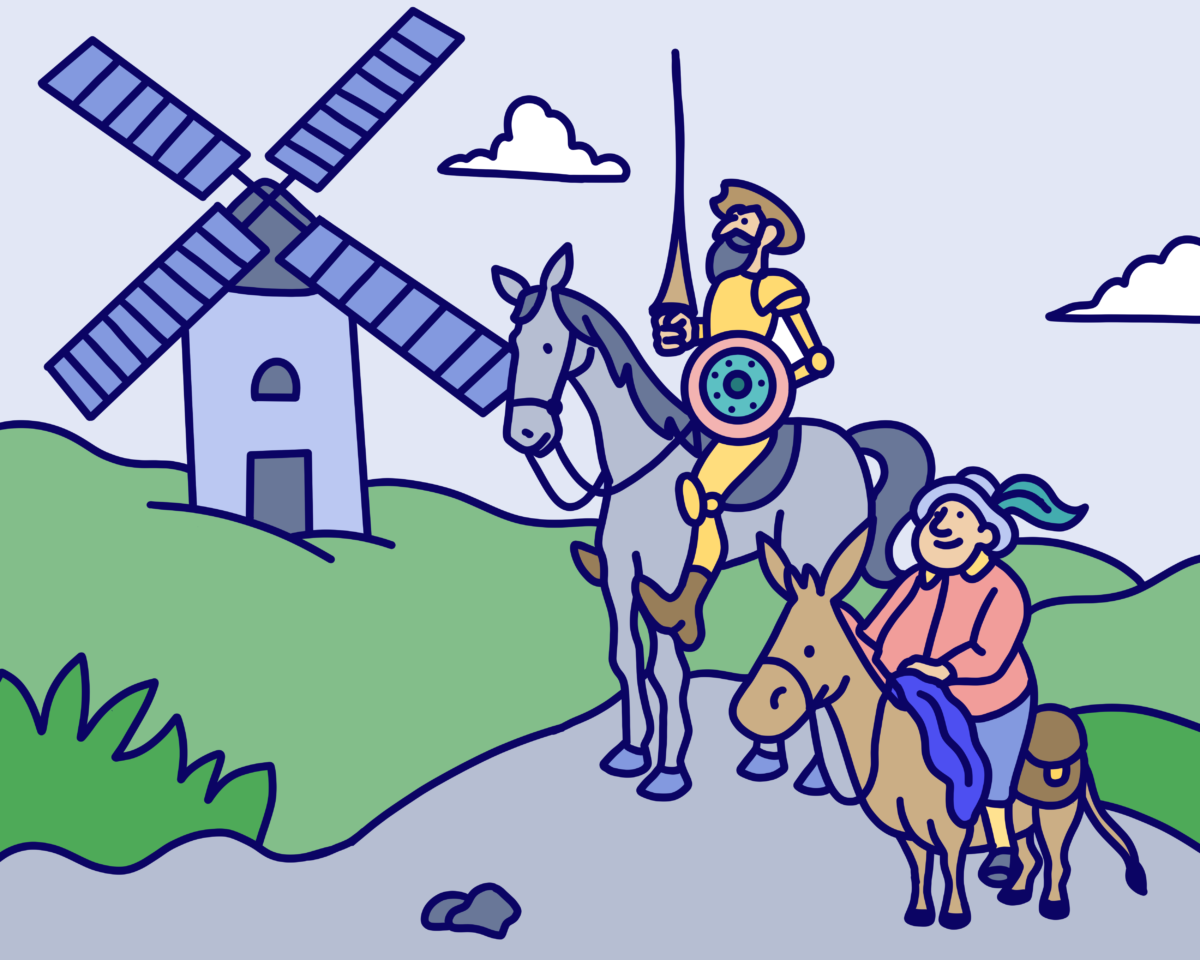
    Miguel de Cervantes alcanza la cima de su carrera con Don Quijote de la Mancha, publicado en 1605, aquí ironiza sobre los caballeros andantes.

    Alonso Quijano el protagonista de la historia y aficionado a los libros de caballería pierde el juicio y recorre los caminos junto a su caballo Rocinante y su escudero Sancho, con el fin de imponer justicia guiado por las normas de caballería. Sus personajes tienen la dualidad de locura y sabiduría; provocan risa y al mismo tiempo admiración por su gran humanidad.

    El Ingenioso Hidalgo Don Quijote de la Mancha es de las obras más importantes de la literatura en castellano y todos quienes hemos nacido hablando esta hermosa lengua estamos familiarizados con esta obra y con su célebre frase de inicio:

    En un lugar de la Mancha, de cuyo nombre no quiero acordarme, no ha mucho tiempo que vivía un hidalgo de los de lanza en astillero, adarga antigua, rocín flaco y galgo corredor.

    Con esa frase comienza esta gran obra de Cervantes y aquí me despido yo.

    Sigue conociendo más curiosidades del lenguaje y de la lengua castellana, visitando y leyendo los distintos artículos que semana a semana publicamos en el blog de iScribo. Y si buscas mejorar tu escritura en español y corregir alguna variante específica de este idioma, no olvides suscribirte a nuestro maravilloso corrector gramatical. ¡Te esperamos!

  • The first literary works in Spanish

    The first literary works in Spanish

    Literature in Spanish is rich in talented playwrights, writers, and poets. Since the Swedish Academy awarded the Nobel Prize in Literature in 1901, eleven of the 102 authors awarded the prize are Spanish-speaking authors: the Spaniards José Echegaray y Eizaguirre (1904), Jacinto Benavente (1922), Juan Ramón Jiménez (1956), Vicente Aleixandre (1977), and Camilo José Cela (1989); the Chileans Gabriela Mistral (1945) and Pablo Neruda (1971); the Guatemalan Miguel Ángel Asturias (1967); the Colombian Gabriel García Márquez (1982); the Mexican Octavio Paz (1990) and the Peruvian Mario Vargas Llosa (2010).

    Now, if we look back at the first literary texts in Spanish, we will see that they were written during the Middle Ages, in the 12th century. This was the time of minstrels, those singers and actors who entertained people with lyrical and epic poetry. Epic poetry was composed of epic poems and narrative works written in verse that sing the exploits of great heroes. The most representative work of the epic poems is the Cantar del Mío Cid. It is an anonymous and classic work from the 12th century that is recorded as the first Castilian work written in verse and the only epic song preserved almost entirely.

    This work is composed of 3,730 verses, which narrate the final part of the life of the hero Rodrigo Díaz de Vivar, El Cid. Here, the complex process of recovering lost honour is narrated, implicitly criticising blood nobility while praising the lower nobility, those who have achieved their status through merit and who fight to win their honour and honour.

    In addition to the songs of deeds and the poetry transmitted by the minstrels, a large part of medieval literature was created in the monasteries with a more cultured poetry of a religious nature and educational purposes, the so-called Mester de Clerecía. One of the most representative works of this type of medieval literature is Los Milagros de Nuestra Señora (The Miracles of Our Lady). This work, written by the clergyman Gonzalo de Berceo between 1246 and 1252, narrates, in Spanish, 25 miracles of the Virgin Mary to make known the religion and the Monastery of San Millán de la Cogolla. In this place, he was a cleric. Furthermore, it was close to the Camino de Santiago, widespread throughout Europe.

    XV century

    The 15th century is a bridge between the Middle Ages and the Renaissance; didactic and religious writing continued during this time, but new metric forms began in part of the lyrics written by people from more affluent classes. For example, in Coplas a la muerte de su padre (Couplets to the Death of His Father), Jorge Manrique alternates octosyllables and pentasyllables. He makes a beautiful reflection on the brevity of life and the irrelevance of material goods.

    With the Renaissance (16th century), interest in classical themes was recovered as oriented towards the cult of reason. In Renaissance prose, pastoral, Moorish, and Byzantine novels stand out as the books of chivalry. Miguel de Cervantes ends this fashion of brave knights swearing eternal love to a weak, faithful lady who reciprocates her love.

    The great Don Quixote

    Miguel de Cervantes peaked his career with Don Quixote of La Mancha, published in 1605; he ironises the knights-errant here.

    Alonso Quijano, the story’s protagonist, and a fan of chivalric books, loses his mind and travels the roads with his horse Rocinante and his squire Sancho to impose justice guided by the rules of chivalry. His characters have the duality of madness and wisdom; they provoke laughter and admiration for his great humanity.

    The Ingenious Gentleman Don Quixote of La Mancha is one of the most important works of literature in Spanish, and all of us who were born speaking this beautiful language are familiar with this work and its famous opening phrase:

    En un lugar de la Mancha, de cuyo nombre no quiero acordarme, no ha mucho tiempo que vivía un hidalgo de los de lanza en astillero, adarga antigua, rocín flaco y galgo corredor.

    [In a village in la Mancha, whose name I do not care to remember, a hidalgo lived not long ago, one of those who keeps a lance on the rack, an old leather shield, skinny nag and swift greyhound.]

    With that phrase begins this great work of Cervantes, and here I say goodbye.

    Keep learning curiosities about the language and the Spanish language, visiting and reading the articles we publish weekly on the iScribo blog. If you want to improve your Spanish writing and correct a specific variant of this language, subscribe to our superb grammar checker. We are waiting for you!

Want more Spanish tips?

Get them direct to your inbox

Sign up for tips and tricks to perfect your Spanish writing skills. You’ll be writing like a native in no time.

Free Trial until 30 September 2021: Our subscription programme does not start until 1 October 2021. So, as long as you provide us with a feedback you can use our site for free until noon 30 September 2021 (GMT)