Day: September 15, 2024

  • El Español de Chile y sus Particularidades

    El Español de Chile y sus Particularidades

    ¿Has estado alguna vez en Chile? Tal vez no, pero ¿has oído hablar de que en Chile pareciera que no se habla español porque nadie que habla español pareciera entenderles? El español de Chile es una de las variedades más singulares de este idioma, destacándose por su pronunciación, vocabulario y modismos propios. Aunque se comparte una base común con el español hablado en otros países de América Latina y España, la variante chilena ha desarrollado características únicas influenciadas por factores históricos, geográficos y socioculturales. En este artículo, exploraremos las principales particularidades del español de Chile, desde su entonación distintiva hasta sus expresiones coloquiales más populares.

    Pronunciación y Fonética

    Uno de los aspectos más notables del español chileno es su pronunciación. Los chilenos tienden a hablar rápidamente y a menudo eliminan o suavizan ciertas consonantes, especialmente al final de las palabras. Un ejemplo clásico es la desaparición de la “s” al final de las sílabas o palabras, fenómeno conocido como aspiración o elisión de la “s”. Así, “más o menos” puede sonar como “má o meno”. Este rasgo no solo afecta la comprensión para los hablantes de otras variedades de español, sino que también contribuye a la musicalidad particular del español chileno.

    Además, el acento chileno es conocido por su entonación ascendente al final de las frases, lo cual da la impresión de que las oraciones terminan en una pregunta, incluso cuando no es así.

    Vocabulario y Léxico

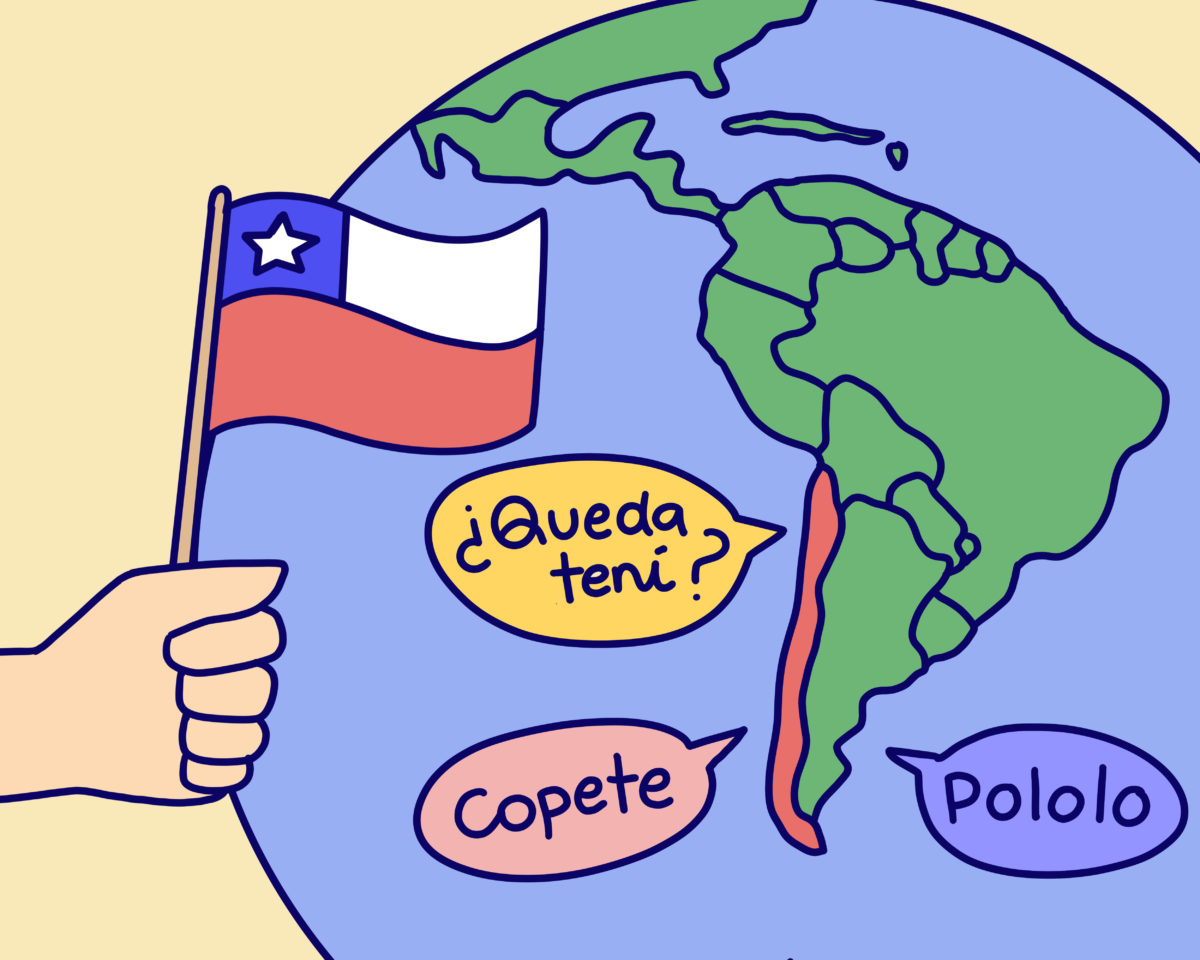
    El español chileno tiene un vocabulario muy rico y variado, con muchas palabras y expresiones que no se encuentran en otras variantes del español. Estas palabras pueden ser de origen indígena, adaptaciones de palabras en inglés o simplemente inventos locales. Por ejemplo, “pololo” y “polola” son términos coloquiales para referirse a un novio o novia, respectivamente, una palabra que no se usa en otros países de habla hispana.

    Los chilenismos, o palabras propias del español de Chile, son una parte integral del idioma. Algunos ejemplos incluyen “fome” (aburrido), “cachai” (¿entiendes?), “al tiro” (inmediatamente) y “luca” (mil pesos). Estas palabras son utilizadas cotidianamente y reflejan la creatividad y la adaptabilidad del lenguaje en Chile.

    Hablar con animales: modismos y expresiones coloquiales

    El uso de modismos y expresiones coloquiales es otro rasgo distintivo del español de Chile. Muchas de estas expresiones son incomprensibles para los hispanohablantes de otros países debido a su significado figurado o contexto específico. “Pasarlo chancho” es una expresión que significa “divertirse mucho”, donde “chancho” literalmente significa “cerdo”. Este tipo de expresiones resalta cómo el español chileno utiliza el humor y la metáfora en su comunicación diaria. “Quedar o andar pato” significa estar sin dinero y “chicotear los caracoles” significa apurar a alguien para que haga algo.

    El verbo “cachar” es extremadamente común y versátil en Chile, utilizado como sinónimo de entender, captar o darse cuenta de algo. “Cachai” es una forma de preguntar “¿entiendes?”, y su uso es tan extendido que ha llegado a ser un marcador lingüístico del español chileno. Además, las frases de cortesía y las interjecciones como “po” (derivado de “pues”) son características del español chileno, añadidas al final de las frases para enfatizar o suavizar el tono de la conversación. Por ejemplo, al decir “sí, po”.

    Influencias Históricas y Culturales

    Las particularidades del español de Chile no surgieron de la nada. La historia del país y sus influencias culturales han jugado un papel clave en la configuración del idioma. La llegada de los conquistadores españoles trajo el idioma al territorio chileno, pero la interacción con las lenguas indígenas, especialmente el mapudungún, dejó una marca indeleble en el léxico y la fonética. Palabras como “kultrún” (tambor ceremonial) y “guata” (vientre) tienen raíces mapuches y son ejemplos de esta influencia.

    Además, la geografía de Chile, con su larga y estrecha forma entre la cordillera de los Andes y el océano Pacífico, ha fomentado un sentido de identidad cultural y lingüística que se refleja en la lengua. La relativa aislación geográfica ha permitido que el español chileno evolucione de manera distinta en comparación con otros dialectos hispanoamericanos.

    Como todos los idiomas y dialectos, el español de Chile continúa evolucionando. La globalización, la migración y el acceso a los medios de comunicación internacionales están introduciendo nuevas palabras y modismos, mientras que algunos términos tradicionales pueden estar cayendo en desuso. No obstante, las características distintivas del español chileno siguen siendo fuertes, y es probable que continúen evolucionando y adaptándose, reflejando la dinámica sociedad chilena.

    El español de Chile es una variedad rica y única del idioma español, con su propio conjunto de características fonéticas, léxicas y modismos. Estas particularidades no solo añaden color y diversidad al panorama lingüístico del mundo hispanohablante, sino que también reflejan la identidad cultural e histórica del pueblo chileno.

    Otro rasgo distintivo del castellano chilenos es la conjugación urbana moderna de la segunda persona singular; así en lugar de decir ¿qué edad tienes? Se pregunta informalmente ¿qué edad tenís? Y en lugar de preguntar ¿cómo estás? se preguntaría ¿cómo estái?

    Con su ritmo rápido, sus palabras únicas y su entonación melodiosa, el español chileno es un claro ejemplo de cómo una lengua puede adaptarse y florecer en diferentes contextos culturales.

    Sigue conociendo más curiosidades del lenguaje y de la lengua castellana, visitando y leyendo los distintos artículos que semana a semana publicamos en el blog de iScribo. Y si buscas mejorar tu escritura en español y corregir alguna variante específica de este idioma, no olvides suscribirte a nuestro maravilloso corrector gramatical. ¡Te esperamos!

  • Chilean Spanish and its peculiarities

    Chilean Spanish and its peculiarities

    Have you ever been to Chile? Maybe not, but have you heard that in Chile, it seems like no one speaks Spanish because no one who speaks Spanish appears to understand them? Chilean Spanish is one of the most unique language varieties, standing out for its unique pronunciation, vocabulary, and idioms. Although it shares a joint base with the Spanish spoken in other Latin American countries and Spain, the Chilean variant has developed unique characteristics influenced by historical, geographical, and sociocultural factors. In this article, we will explore the main peculiarities of Chilean Spanish, from its distinctive intonation to its most popular colloquial expressions.

    Pronunciation and Phonetics

    One of the most notable aspects of Chilean Spanish is its pronunciation, which can challenge non-native speakers. Chileans speak quickly and often drop or soften certain consonants, especially at the end of words. A classic example is the disappearance of the “s” at the end of syllables or words, a phenomenon known as aspiration or elision of the “s.” Thus, “más o menos” can sound like “má o meno.” This trait affects comprehension for speakers of other Spanish varieties and contributes to Chilean Spanish’s musicality.

    In addition, the Chilean accent is known for its rising intonation at the end of sentences, which gives the impression that sentences end in a question, even when they do not.

    Vocabulary and Lexicon

    Chilean Spanish has a vibrant and varied vocabulary, with many words and expressions not found in other Spanish variants. These words may be of Indigenous origin, adaptations of English words, or simply local inventions. For example, “pololo” and “polola” are colloquial terms for a boyfriend or girlfriend, respectively, a word not used in other Spanish-speaking countries.

    Chileanisms, the words native to Chilean Spanish, are not just a part of the language but a part of daily life. Words like ‘fome’ (boring), ‘cachai’ (do you understand?), ‘al tiro’ (immediately), and ‘luca’ (a thousand pesos) are used in everyday conversations, reflecting the language’s creativity and adaptability in Chile.

    Talking to Animals: Idioms and Colloquial Expressions

    Using idioms and colloquial expressions is another distinctive feature of Chilean Spanish. Due to their symbolic meaning or specific context, many of these expressions are incomprehensible to Spanish speakers from other countries. “Pasarlo chancho” is an expression that means “to have a lot of fun,” whereas “chancho” literally means “pig.” These expressions highlight how Chilean Spanish uses humour and metaphor in daily communication. “Quedar o andar pato” means to be without money, and “chicotear los caracoles” means to rush someone to do something.

    The verb “cachar” is extremely common and versatile in Chile, used as a synonym for understanding, grasping, or realising something. “Cachai” is a way of asking, “Do you understand?” and its use is so widespread that it has become a linguistic marker of Chilean Spanish. In addition, polite phrases and exclamations such as “po” (derived from “pues”) are characteristic of Chilean Spanish, added at the end of sentences to emphasise or soften the tone of the conversation. For example, when saying “sí, po.”

    Historical and Cultural Influences

     The particularities of Chilean Spanish did not emerge out of nowhere. The country’s history and cultural influences have played a key role in shaping the language. The arrival of the Spanish conquistadors brought the language to Chilean territory, but the interaction with Indigenous languages, especially Mapudungún, left an indelible mark on the lexicon and phonetics. Words such as “kultrún” (ceremonial drum) and “guata” (belly) have Mapuche roots and are examples of this influence.

    Furthermore, Chile’s geography, with its elongated, narrow shape nestled between the Andes Mountains range and the Pacific Ocean, has fostered a profound sense of cultural and linguistic identity distinctly reflected in the language. This relative geographic isolation has allowed Chilean Spanish to evolve uniquely, distinct from other Spanish-American dialects, and this is something to be appreciated.

    Like all languages ​​and dialects, Chilean Spanish continues to evolve. Globalisation, migration, and access to international media are introducing new words and idioms, while some traditional terms may be falling into disuse. Nevertheless, the distinctive features of Chilean Spanish remain strong and are likely to continue to evolve and adapt, reflecting the dynamic Chilean society.

    Chilean Spanish is not just a variety; it’s a rich and unique contribution to the Spanish language. Its phonetic, linguistic, and idiom features add colour and diversity to the Spanish-speaking world’s linguistic landscape, reflecting the Chilean people’s cultural and historical identity and enriching the global Spanish community.

    Another distinctive feature of Chilean Spanish is the modern urban conjugation of the second person singular; thus, instead of saying ¿qué edad tienes? (How old are you?) one would informally ask ¿qué edad tenís? and instead of asking ¿cómo estás? (How are you?) one would ask ¿cómo estái?

    With its fast rhythm, unique words, and melodic intonation, Chilean Spanish is a dynamic example of how a language can adapt and flourish in different cultural contexts.

    Keep learning curiosities about the language and the Spanish language, visiting and reading the articles we publish weekly on the iScribo blog. If you want to improve your Spanish writing and correct a specific variant of this language, subscribe to our superb grammar checker. We are waiting for you!

Want more Spanish tips?

Get them direct to your inbox

Sign up for tips and tricks to perfect your Spanish writing skills. You’ll be writing like a native in no time.

Free Trial until 30 September 2021: Our subscription programme does not start until 1 October 2021. So, as long as you provide us with a feedback you can use our site for free until noon 30 September 2021 (GMT)