Day: November 27, 2024

  • Pronunciación de la v y la b en español, ¿cuál es la correcta?

    Pronunciación de la v y la b en español, ¿cuál es la correcta?

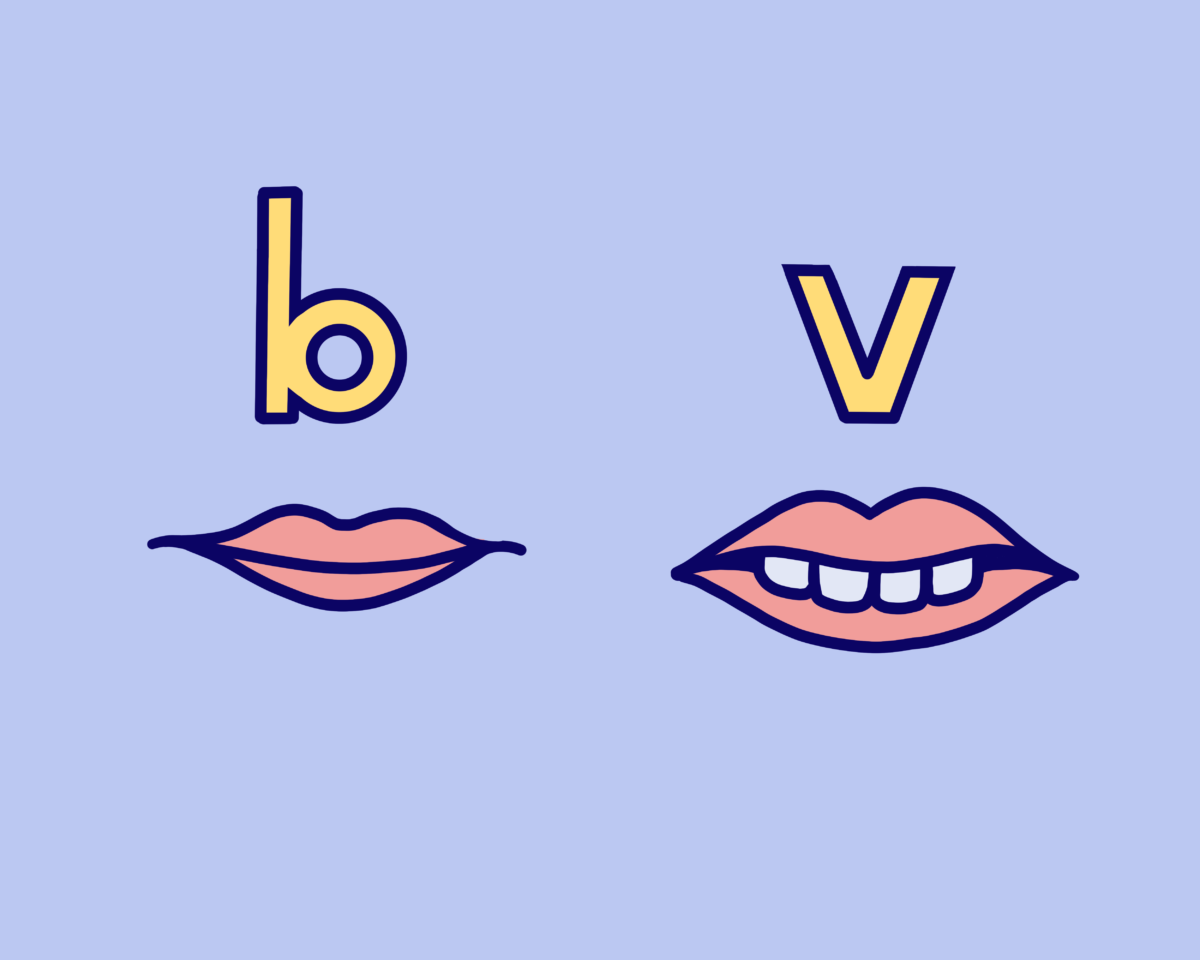
    En español, a menudo surge la pregunta de si existe o no una diferencia en la pronunciación de las letras v y b, especialmente debido a la influencia de otros idiomas, como el inglés, donde esta diferencia es clara. Sin embargo, en el español moderno, tanto en España como en Latinoamérica, no existe una distinción fonética entre ambas letras. Ambas se pronuncian de manera similar y se conocen como bilabiales sonoras, produciendo un sonido que en fonética se representa con el símbolo /b/.

    Esta unificación en la pronunciación tiene raíces históricas: en español antiguo sí se distinguían ambos sonidos, pero con el tiempo, las diferencias se fueron perdiendo. Hoy, en todo el mundo hispanohablante, las letras b y v suelen sonar idénticas, lo que genera la particularidad de que, al hablar, estas letras se distinguen sólo en la escritura. Esta característica hace que en español se emplee a menudo el término “uve” para referirse a la v y diferenciarla así de la b, que se llama “be”.

    Es importante destacar que, aunque esta igualación en la pronunciación es la norma en el español actual, algunos hispanohablantes que están en contacto frecuente con el inglés tienden a marcar la diferencia entre v y b al hablar español, imitando la pronunciación inglesa. Esto se observa en algunas zonas de América Latina, donde los hablantes, sobre todo bilingües, buscan reproducir la diferencia para evitar confusiones en el inglés, idioma en el cual b y v representan sonidos distintos.

    Esta distinción también está presente, ahora de forma espontánea, en hablantes valencianos o mallorquines y de zonas de Cataluña por influencia del catalán, además de ciertos puntos muy específicos de América por el influjo de lenguas amerindias. Todos ellos realizan la articulación labiodental para la pronunciación de la letra v.

    Desde una perspectiva normativa, la Real Academia Española (RAE) afirma que no existe ninguna necesidad de hacer esta distinción en español, ya que no forma parte del sistema fonético del idioma. Así que, para hablar correctamente en español, no es necesario diferenciar estos sonidos. Esta particularidad de nuestro idioma es una muestra de cómo ha evolucionado para simplificar la comunicación sin perder claridad.

    Ahora, desde el punto de vista lingüístico, no hay un “error” en pronunciar b y v de una forma u otra; de hecho, la lingüística lo que hace es registrar las distintas formas de habla. Lo que sí es cierto es que pronunciar la b y la v de la misma manera esta es la forma más extendida en el mundo hispanohablante.

    Sigue conociendo más curiosidades del lenguaje y de la lengua castellana, visitando y leyendo los distintos artículos que semana a semana publicamos en el blog de iScribo. Y si buscas mejorar tu escritura en español y corregir alguna variante específica de este idioma, no olvides suscribirte a nuestro maravilloso corrector gramatical. ¡Te esperamos!

  • Pronunciation of v and b in Spanish: which one is correct?

    Pronunciation of v and b in Spanish: which one is correct?

    In Spanish, the question often arises as to whether or not there is a difference in the pronunciation of the letters v and b, mainly due to the influence of other languages, such as English, where this difference is clear. However, there is no phonetic distinction between the letters in modern Spanish, Spain, and Latin America. Both are pronounced similarly and are known as voiced bilabials, producing a sound represented in phonetics by the symbol /b/.

    This unification in pronunciation has historical roots: in ancient Spanish, both sounds were distinguishable, but over time, the differences were lost. Today, throughout the Spanish-speaking world, the letters b and v often sound identical, which creates the peculiarity that, when speaking, these letters are distinguished only in writing. This characteristic means that in Spanish, the term “uve” is often used to refer to v and thus differentiate it from b, called “be”.

    It is important to note that, although this equalisation in pronunciation is the norm in modern Spanish, some Spanish speakers in frequent contact with English tend to mark the difference between v and b when speaking Spanish, imitating the English pronunciation. This is observed in some areas of Latin America, where speakers, especially bilinguals, try to reproduce the difference to avoid confusion in English, a language in which b and v represent different sounds.

    This distinction is also present, now spontaneously, in Valencian or Majorcan speakers and in areas of Catalonia due to the influence of Catalan. Additionally, it is found in certain very specific parts of America, where the influence of Amerindian languages has led to the use of labiodental articulation to pronounce the letter v.

    From a normative perspective, the Royal Spanish Academy (RAE) states that there is no need to make this distinction in Spanish since it is not part of the phonetic system of the language. So, to speak correctly in Spanish, it is optional to differentiate these sounds. This particularity of our language is an example of how it has evolved to simplify communication without losing clarity.

    Now, from a linguistic point of view, there is no “mistake” in pronouncing b and v in one way or another; in fact, linguistics records the different ways of speaking. What is certain is that pronouncing b and v in the same way is the most widespread way in the Spanish-speaking world.

    Keep learning curiosities about the language and the Spanish language, visiting and reading the articles we publish weekly on the iScribo blog. If you want to improve your Spanish writing and correct a specific variant of this language, subscribe to our superb grammar checker. We are waiting for you!

Want more Spanish tips?

Get them direct to your inbox

Sign up for tips and tricks to perfect your Spanish writing skills. You’ll be writing like a native in no time.

Free Trial until 30 September 2021: Our subscription programme does not start until 1 October 2021. So, as long as you provide us with a feedback you can use our site for free until noon 30 September 2021 (GMT)