Day: December 18, 2024

  • ¿Por qué diferenciamos entre yerno y nuera? Origen de estas palabras

    ¿Por qué diferenciamos entre yerno y nuera? Origen de estas palabras

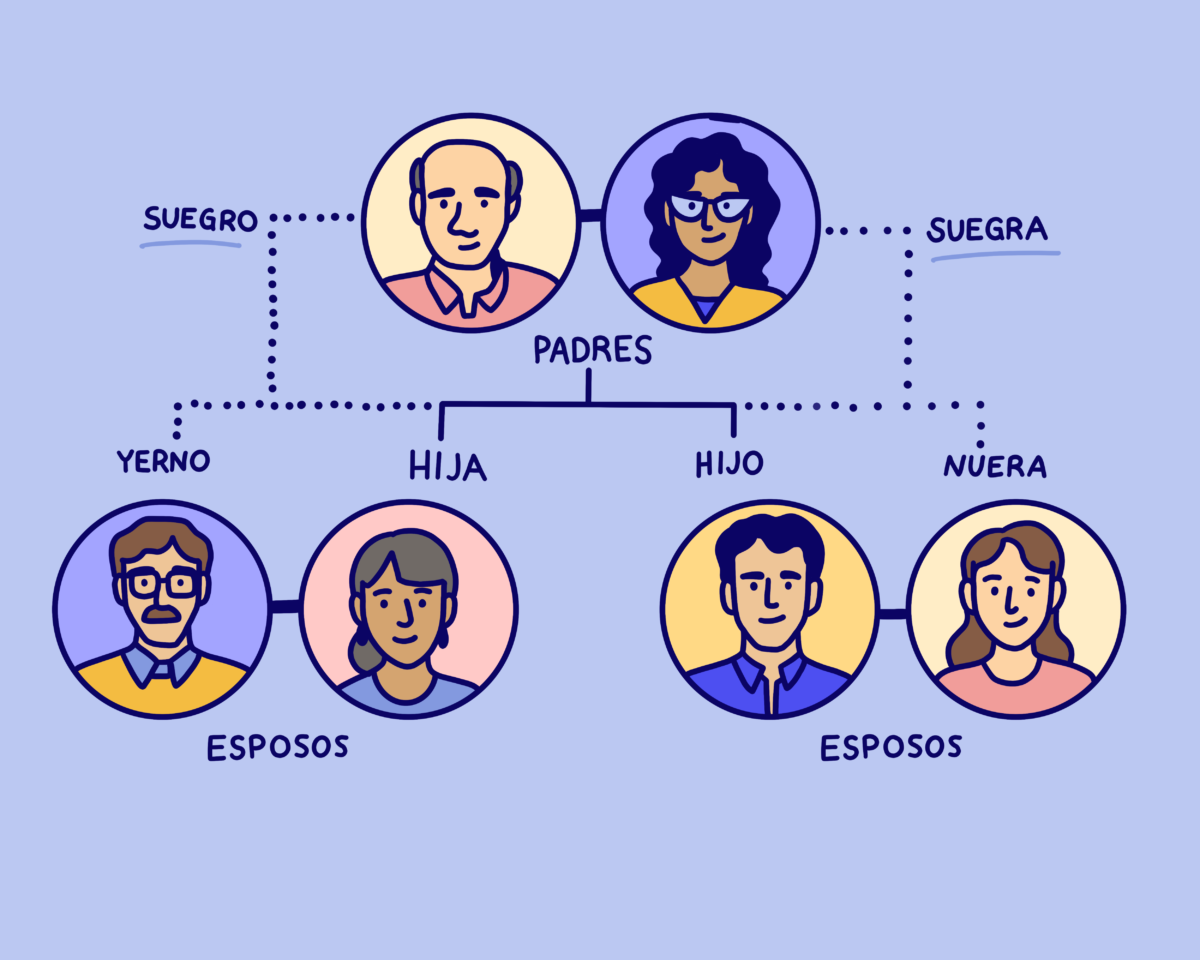
    El español, lleno de curiosidades y herencias lingüísticas, también guarda secretos en palabras que usamos a diario. Hoy nos detenemos en el peculiar caso de yerno y nuera, los términos que usamos para referirnos al esposo o esposa de nuestros hijos. Pero ¿por qué no decimos nuero y yerna?

    El origen etimológico de yerno y nuera

    La palabra yerno proviene del latín gener, que se relaciona con conceptos de genealogía y linaje. En latín clásico, gener designaba específicamente al esposo de la hija, reflejando la importancia de los roles familiares en la sociedad romana. El término evolucionó fonéticamente al gignere en latín vulgar y finalmente al yerno en español.

    Por otro lado, nuera proviene del latín nurus, que significaba “esposa del hijo”. Esta palabra compartía una raíz con términos relacionados con el cuidado o la crianza, un eco de los roles tradicionales asignados a las mujeres en las familias antiguas. Así, ambas palabras tienen raíces latinas y roles bien definidos desde tiempos remotos​.

    ¿Por qué no existe nuero ni yerna? La ausencia de términos como nuero y yerna puede explicarse en gran parte por cómo las lenguas reflejan las estructuras sociales históricas. Las lenguas suelen codificar en sus palabras los roles que tenían mayor relevancia cultural. En las sociedades patriarcales de la antigüedad, las relaciones de parentesco con el esposo de la hija (yerno) y la esposa del hijo (nuera) eran las más importantes para el mantenimiento del linaje y las alianzas familiares.

    Por el contrario, no había tanta necesidad de definir categorías “espejo” como yerna o nuero, porque estas relaciones no tenían el mismo peso cultural o simbólico en esos contextos. El idioma simplemente no desarrolló palabras que no fueran necesarias para su función social.

    En contraste, suegro y suegra existen porque ambas relaciones –con el padre y la madre de la pareja– tenían relevancia en las estructuras familiares. Estas palabras también provienen del latín: socrus (suegra) y socrer (suegro), y refuerzan la simetría en las relaciones de parentesco ascendentes.

    El idioma, al igual que la cultura, se adapta a lo que la sociedad necesita nombrar. Así, mientras seguimos utilizando yerno y nuera, recordamos que nuestras palabras son un testimonio vivo de las tradiciones y estructuras de nuestros antepasados.

    Sigue conociendo más curiosidades del lenguaje y de la lengua castellana, visitando y leyendo los distintos artículos que semana a semana publicamos en el blog de iScribo. Y si buscas mejorar tu escritura en español y corregir alguna variante específica de este idioma, no olvides suscribirte a nuestro maravilloso corrector gramatical. ¡Te esperamos!

  • Why Spanish has two different words: yerno  and nuera? Origin of these words

    Why Spanish has two different words: yerno and nuera? Origin of these words

    Spanish, full of curiosities and linguistic inheritances, also keeps secrets in words we use daily. Today, we focus on the peculiar case of yerno and nuera, the terms we use to refer to the husband or wife of our children. But why don’t we say nuero and yerna?

    The etymological origin of yerno and nuera

    The word yerno comes from the Latin gener, which is related to concepts of genealogy and lineage. In classical Latin, gener specifically designated the daughter’s husband, reflecting the importance of family roles in Roman society. The term evolved phonetically to gignere in Vulgar Latin and yerno in Spanish.

    On the other hand, nuera comes from the Latin nurus, which means “son’s wife.” This word shared a root with terms related to care or upbringing, echoing the traditional roles assigned to women in ancient families. Thus, both words have Latin roots and well-defined roles from ancient times.

    Why is there no such thing as yerna or nuero? The absence of terms like yerna and nuero can largely be explained by how languages ​​reflect historical social structures. Languages ​​often encode the roles with the most remarkable cultural relevance in their words. In ancient patriarchal societies, kinship relationships with the daughter’s husband (yerno, son-in-law) and the son’s wife (nuera, daughter-in-law) were the most important for maintaining lineage and family alliances.

    In contrast, there was not as much need to define “mirror” categories like yerna or nuero because these relationships did not carry the same cultural or symbolic weight in those contexts. Language did not develop words that were not necessary for their social function.

    In contrast, father-in-law and mother-in-law exist because both relationships – with the couple’s father and mother – were relevant in family structures. These words also come from Latin: socrus (suegra, mother-in-law) and socrer ( suegro, father-in-law), and they reinforce symmetry in ascending kinship relationships.

    Language, like culture, adapts to what society needs to name. So, while we continue to use yerno and nuera, we remember that our words are a living testimony to the traditions and structures of our ancestors.

    Keep learning curiosities about the language and the Spanish language, visiting and reading the articles we publish weekly on the iScribo blog. If you want to improve your Spanish writing and correct a specific variant of this language, subscribe to our superb grammar checker. We are waiting for you!

Want more Spanish tips?

Get them direct to your inbox

Sign up for tips and tricks to perfect your Spanish writing skills. You’ll be writing like a native in no time.

Free Trial until 30 September 2021: Our subscription programme does not start until 1 October 2021. So, as long as you provide us with a feedback you can use our site for free until noon 30 September 2021 (GMT)