Author: Constanza Jeldres

  • Spanish dialects around the world

    Spanish dialects around the world

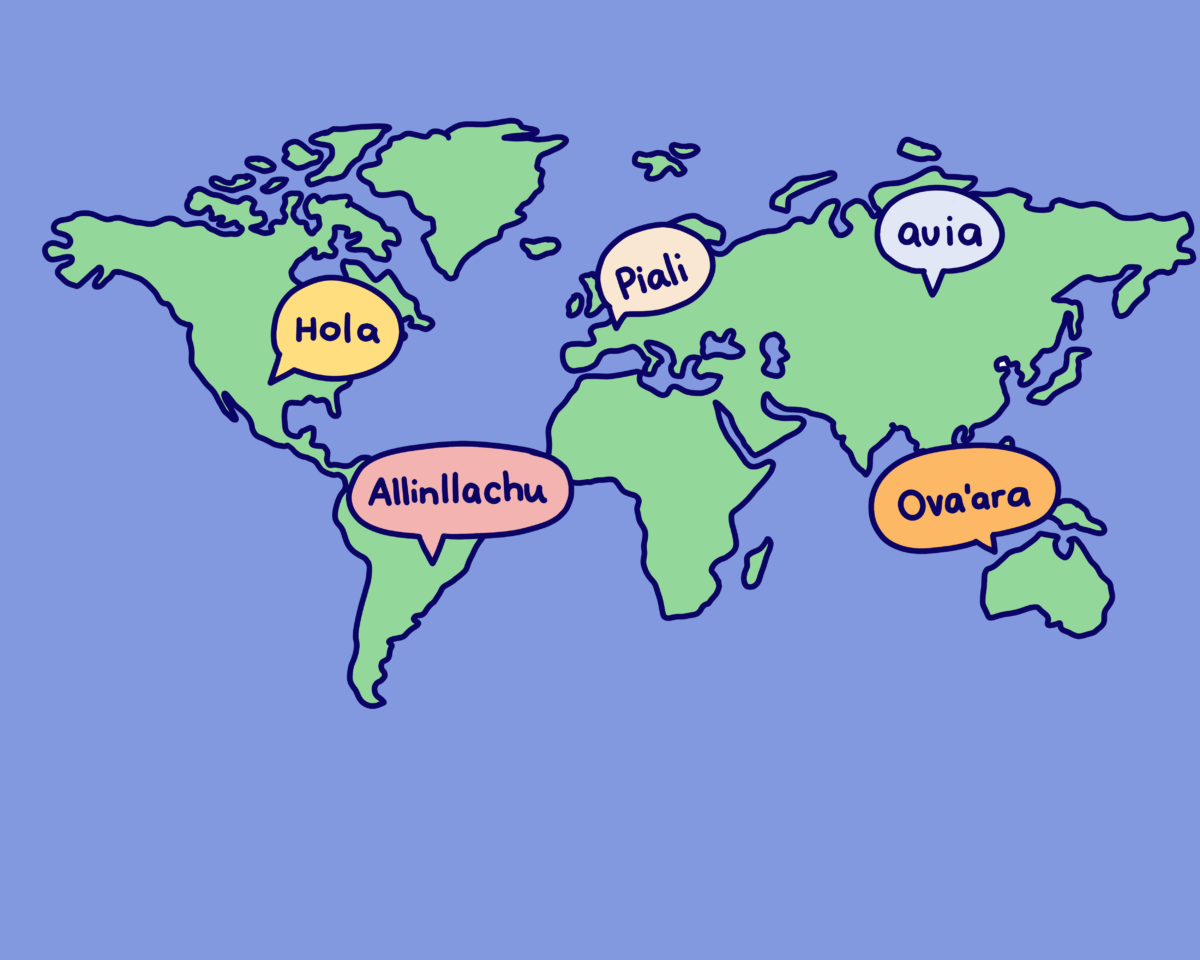
    Spanish, also known as Castilian, is spoken, or studied by more than 500 million people around the world; of these, more than 450 million are fully fluent – approximately 50 million are fluent with certain limitations, and nearly 20 million are in the language learning process. This means that 67% of the world’s population speaks Spanish. Yes, I said it right: 67% of the world’s population speaks Spanish!!

    It is the second most spoken language after Mandarin, ahead of English, and is the official language of 21 countries. In Europe, it is spoken in Spain; In America, it is the official language of Argentina, Bolivia, Colombia, Costa Rica, Cuba, Chile, Ecuador, Guatemala, Honduras, Mexico, Nicaragua, Panama, Paraguay, Peru, Puerto Rico, Dominican Republic, El Salvador, Uruguay, and Venezuela. and in Africa, it is the official language in Equatorial Guinea. Additionally, there is a significant percentage of native speakers in parts of the United States, Brazil, Canada, Algeria, the Philippines, Australia, and Israel.

    Faced with this enormous demographic and geographical extension, there is also massive linguistic diversity, both phonetic (that is, in the accents and pronunciation of words), lexical (forms of writing) and morphosyntactic (ways of structuring a sentence).

    Measure your words when talking to your grandfather

    Spanish speakers know very well that these peculiarities exist since not everyone uses the same variety of the language. Just as there are linguistic varieties of the same language depending on the cultural or social group to which one belongs, the same language also varies depending on the generations. For example, a grandfather does not use the same expressions or words as his grandchildren; these intergenerational linguistic subtleties probably come to light when interacting.

    Being aware of these differences can be complicated, but at the same time exciting and very entertaining when learning a new language. Let’s look at some examples.

    Do you know the adage “When in Rome, do as the Romans do”?

    Well, it makes perfect sense when talking about language, and even more so about the same language, since geography is an essential factor in the formation and evolution of languages: ¿tú vas hoy? or ¿vos vas hoy? ¿vosotros vais hoy? or ¿ustedes van hoy? How should you ask? Don’t panic, don’t collapse, all those options are fine. The difference is that the “¿vas hoy?” It is used in Spain and much of America, while “¿vos vas hoy?” It is the common expression in Argentina and Uruguay. If you are in Spain, you will hear this same question in the plural as ¿vosotros vais hoy? in an informal context, while in a formal context, it will be ¿ustedes van hoy?” in the case of American countries, ¿ustedes van hoy?” is used, whether in a formal or informal context. Spaniards will only say “ustedes” when they want to address someone with respect. On the other hand, the formal singular for Spain and for the countries of America is “you”.

    If you want to know more about these morphosyntactic differences, you can review the Cervantes Virtual Centre’s article about the linguistic diversity of contemporary Spanish.

    Potatoes or tomatoes?

    But let’s leave behind the more formal issues of language use and give way to the most fun of the Spanish variants. Where there is the most outstanding number of lexical variations is in the vocabulary related to food, so while in Spain they talk about patatas, in Latin America, they are papas, and while in Mexico, Venezuela and Spain they call the delicious summer fruits fresas, in Argentina, Chile and Uruguay are called frutillas.

    Since I have lived in Spain and am Chilean, I can tell you more anecdotes. For example, we stress words of Anglo-Saxon origin differently: in Spain, people say deo, while in Chile we say video and while Chileans say ícono, Spaniards say icono.

    Does the hole in your sock have a name in your country? Well, in Spain, they call it tomate (tomato); that was very funny to me when I learned it because, in Chile, we also use the name of a vegetable, but it’s papa (potato), ha-ha!

    I will give you two last pieces of information that have to do with professional translation and, of course with the country for which it is translated. Do you know the children’s movie Chicken Run? (it has been a few years since it was released). In Chile it was translated as “Pollitos en fuga”, while in Spain its commercial name was “Evasión en la granja”, and when “Eternal Sunshine of the Spotless Mind” was released, it arrived in Chile as “Eterno resplandor de una mente sin recuerdos”, while in Spain its translation was “¡Olvídate de mí!”, erasing all poetic traces of the original title ☹.

    Finally, I leave you a video that summarises in a very entertaining way what we have been talking about in this article. Don’t despair and laugh at how challenging and diverse Spanish is sometimes! Enjoy it!

    Remember that no matter what variant of Spanish you speak or are learning, there is no one Spanish that is better than another, as there are only differences within the same language, and they are all fine. If you travel or share with Spanish speakers of a different variant than yours, you will have fun and be significantly enriched by seeing the differences. In addition, the new iScribo considers a large part of these within its latest version of grammar correction. So, practice, learn and enjoy!
  • Signos de exclamación e interrogación en español. Veamos cómo usarlos

    Signos de exclamación e interrogación en español. Veamos cómo usarlos

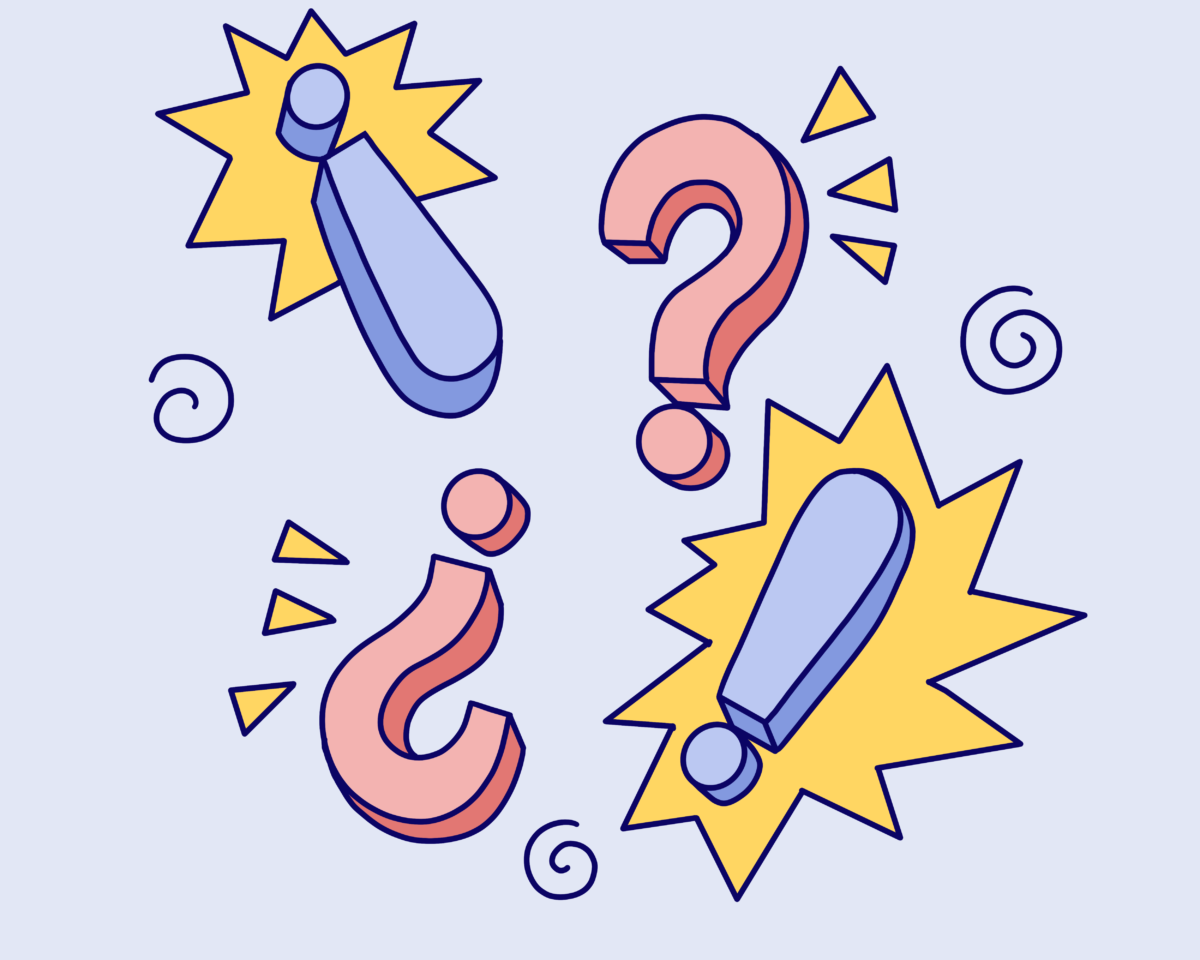
    En español, los signos de exclamación (¡!) e interrogación (¿?) son dobles, como los paréntesis. Es decir, delimitan tanto las secuencias interrogativas, como las exclamativas. A diferencia de lenguas como el inglés o el francés, que cuentan con auxiliares o una fórmula u orden gramatical específico para la construcción de una pregunta, el español es más libre, por lo que la única forma de indicar que se está frente al inicio de una exclamación o interrogación es a través del primer signo. Ésta es la pista que permite entonar correctamente al leer un texto, por lo que los signos de apertura (¡¿) no deben suprimirse por imitación a otras lenguas que sólo utilizan el signo al cierre.

    Pero ¿cómo utilizar estos signos?

    • Cuando una frase termina con una pregunta o exclamación los signos de cierre son el signo al final del enunciado (!?) y por lo tanto no corresponde poner un punto al final (el punto ya lo incluye el signo: !?), por lo que la palabra que le sigue se escribirá siempre con mayúscula inicial.

    Ejemplo: ¿Qué hora es? Olvidé mi reloj en casa.

    • Si el enunciado no termina en la interrogación o exclamación se pueden agregar otros signos de puntuación, por ejemplo, coma (,), punto y coma (;) o dos puntos (:):

    Ejemplos:

    ¡Tranquilo!, ¿vale?

     «Aúllan como demonios cuando llega la noche; ¿sabes por qué?: para quebrar el silencio que los aterroriza» (Vargas Llosa La ciudad y los perros, 1962).

    • Finalmente, no te olvides que si la palabra inmediatamente anterior al principio de una pregunta o exclamación es también el final de una frase ésta debe sí o sí llevar punto.

    Ejemplo: No sé por qué voy. ¿Por qué soy así, qué busco? (Leila Guerriero Domingo, 2020).

    Recuerda que los signos de puntuación tienen como fin transcribir -en parte- las pausas, tonos, duración e intensidad de la curva melódica de la lengua hablada. Y aunque es imposible transcribir el discurso oral con todos sus matices, los signos de puntuación nos ayudan bastante y aún con sus limitaciones son capaces de interpretar y armonizar un texto escrito con la melodía de la oralidad. Piensa que los signos de puntuación nos ayudan a escribir las partituras de nuestra voz.

  • Question and exclamation marks in Spanish. Let’s see how to use it!

    Question and exclamation marks in Spanish. Let’s see how to use it!

    In Spanish, the exclamation marks (!) and question marks (?) are double, like parentheses. That is, they delimit both interrogative and exclamatory sequences. Unlike languages like English or French, which have auxiliaries or a specific grammatical formula or order for constructing a question, Spanish is more unrestrained, so the only way to indicate that you are facing the beginning of an exclamation or question mark is through the first sign. This is the clue that allows correct intonation when reading a text, so the opening signs (?) should not be suppressed to imitate other languages that only use the closing sign.

    But how do we use these signs?

    • When a sentence ends with a question or exclamation, the closing signs are the sign at the end of the statement (!?) Therefore, it is not appropriate to put a period at the end (the point is already included by the sign: !?); thus, the word that follows it will always be written with an initial capital letter.

    Example: ¿Qué hora es? Olvidé mi reloj en casa.

                     [What time is it? I left my watch at home]

    • If the statement does not end in a question or exclamation, other punctuation marks can be added, for example, comma (,), semicolon (;) or colon (:):

    Examples:

    ¡Tranquilo!, ¿vale?

    [Calm down, okay?]

       «Aúllan como demonios cuando llega la noche; ¿sabes por qué?: para quebrar el silencio que los aterroriza»

    [«They howl like demons when night comes; Do you know why? to break the silence that terrifies them»]

    (Vargas Llosa La ciudad y los perros, 1962).

    • Finally, do not forget that if the word immediately before the beginning of a question or exclamation is also the end of a sentence, it must have a period.

    Example: No sé por qué voy. ¿Por qué soy así, qué busco?

      [I don’t know why I’m going. Why am I like this? What am I looking for?]

    (Leila Guerriero Domingo, 2020).

    Remember that punctuation marks are intended to transcribe -in part- the pauses, tones, duration, and intensity of the melodic curve of the spoken language. Although it is impossible to transcribe oral discourse with all its nuances, punctuation marks help us a lot. Despite their limitations, they can interpret and harmonise a written text with the melody of orality. Think that punctuation marks are symbols that help us write the scores of our voices.

Want more Spanish tips?

Get them direct to your inbox

Sign up for tips and tricks to perfect your Spanish writing skills. You’ll be writing like a native in no time.

Free Trial until 30 September 2021: Our subscription programme does not start until 1 October 2021. So, as long as you provide us with a feedback you can use our site for free until noon 30 September 2021 (GMT)