Author: Constanza Jeldres

  • Spanglish. The influence of a giant

    Spanglish. The influence of a giant

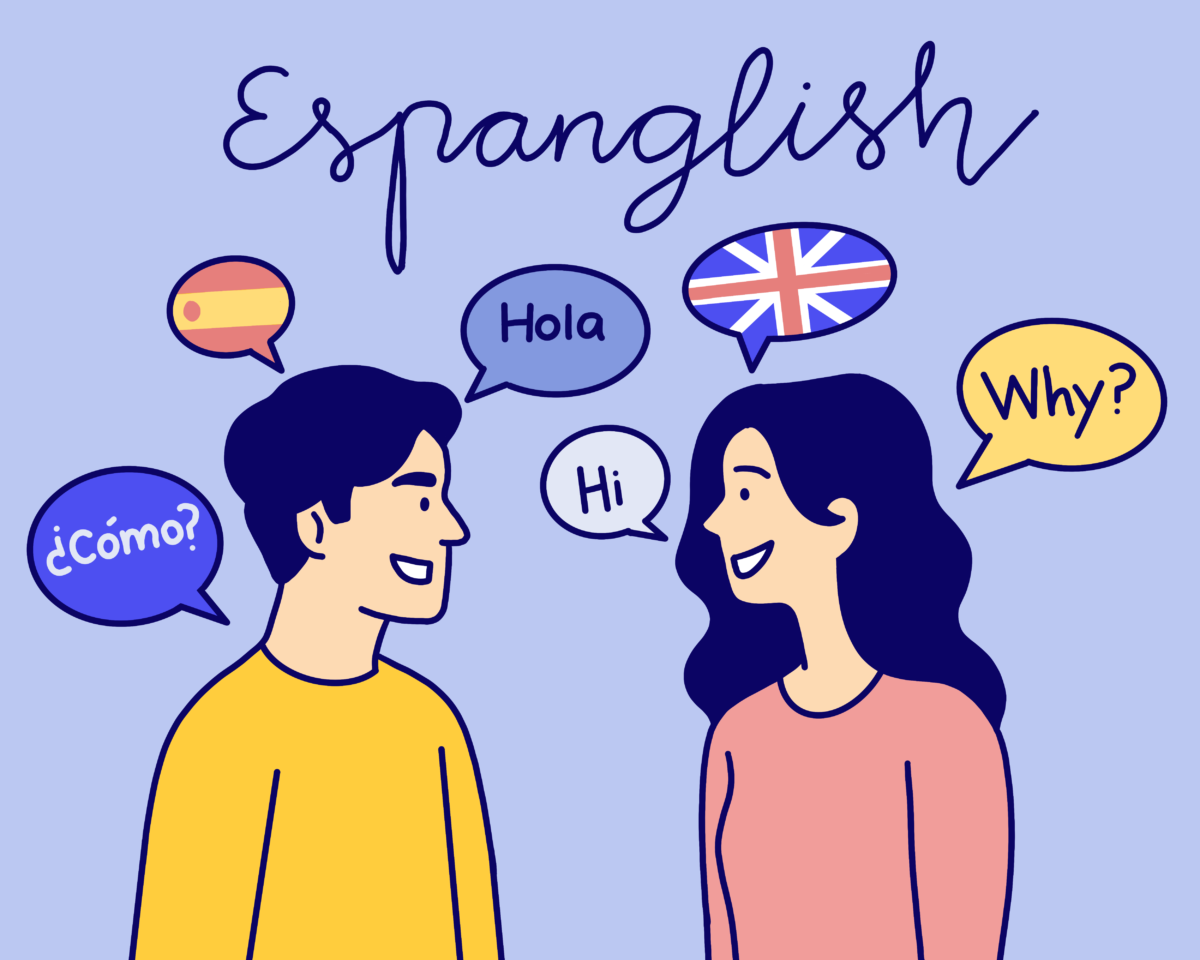
    Estás ready to read this article? Yes, I know that sometimes it can be hard but let’s understand un poco about what Spanglish or espanglish is.

    Spanglish is how some non-standard Spanish spoken in North America are colloquially known in contexts where Spanish and English are in prolonged contact due to group bilingualism.

    Spanish and English are two widely spoken languages worldwide. Although these two languages are studied and spoken separately, we cannot ignore a sociolinguistic phenomenon that occurs when bilingual speakers of English and Spanish interact. They do not always choose to conduct the conversation purely in Spanish or English but rather choose a third way: Spanglish.

    You may like it or not, but here there is. A hybrid between English and Spanish that linguists don’t know how to classify. There are no rules; It may seem like Spanish with many anglicisms between sentences or English with many Spanish words intertwined. For some linguists, it is simply code-switching, such as switching from a dialect to a standard language or when speaking the formal language and then switching to a more informal use. In many sectors, it tends to bother; for some, it is a sign of a low cultural level, while others say it shows how language is in constant creation. Others observe the phenomenon attentively and without judgment, but let’s start at the beginning: when did people start talking like this?

    When did people start speaking Spanglish?

    The origin of Spanglish can be seen in the early interactions between Spanish explorers and the indigenous people of the Americas, and later, during the Spanish colonisation of the southwestern United States, the Mexican- American War, and the annexation of territories such as Texas and California. Then, in the 20th century, increased migration and cultural exchange between Spanish-speaking immigrants and English-speaking communities, particularly in urban areas, further boosted the development of Spanish. This was especially true in families where the first generation did not speak English, but their children did.

    The Puerto Rican writer Salvador Tió used the term Spanglish for the first time in an article titled “Teoría del Spanglish”, published on October 28, 1948, in the Diario de Puerto Rico. There, he referenced native Spanish speakers who renounced their mother tongue to learn English and immigrate to non-Hispanic countries.

    Currently, Spanglish’s influence on popular culture is reflected in social networks, music, and cinema, especially among the younger generations, where it is widely accepted.

    Chicano, Tex-mex and Cubonics: living la vida loca

    The places where it is most common to speak Spanglish are those in the United States, where there is a large population of Latinos. For this reason, Southern California and Puerto Rico are significant hotspots for Spanglish.

    Do you remember Ricky Martin’s song “Living la vida loca”? Well, that’s Spanglish. And Ricky Martin is Puerto Rican; it all makes sense now, right?

    Chicano English is often used to refer to the dialect of English spoken by Americans of Mexican origin. Within this is the Texan variant, which is spoken mainly in southern Texas. However, these terms are also used to refer to the Spanglish spoken in these geographical areas, which differs, for example, from that developed by Cuban Americans residing in Miami, whose Spanglish is usually known as the Cubonics language.

    What do you think of Spanglish? Is it possible that English and Spanish will merge into a single language and Spanglish will finally be recognised? Would you like that to happen? Share with us what you think of this linguistic phenomenon, whether you like it or not and if you are a user. We would want to know what you think.

    Spanglish exists -that is a fact- but we still have English and Spanish. So, if you want to improve your writing in Spanish, take advantage of iScribo, our excellent spelling and grammar correction tool. You will not regret it!

    Hasta la vista, baby.

  • El calendario en español: días, meses y estaciones del año. ¿de dónde provienen sus nombres?

    El calendario en español: días, meses y estaciones del año. ¿de dónde provienen sus nombres?

    ¿Qué es el tiempo? Desde la filosofía el pensamiento alrededor del tiempo radica en su naturaleza: ¿existe o no el tiempo y si existe, realmente podemos medirlo?

    Hoy, observaremos el tiempo desde la física, donde se plantea que el tiempo es una magnitud con la que se mide la separación, simultaneidad o duración de acontecimientos. Esto nos permite organizarlos en su forma temporal más simple. Es decir, pasado, presente y futuro. Donde los eventos se ubican en cada uno de estos conjuntos dependiendo de su relación con otro.

    El sistema de representación del transcurso del tiempo más conocido es el calendario y el modelo de calendario que se utiliza de manera oficial en casi todo el mundo es el calendario gregoriano, denominado así en honor a su promotor, el papa Gregorio XIII.

    El término calendario proviene del latín calendarium, de calendae (calendas) nombre que en la antigua Roma se daba al primer día de cada mes, que correspondía a la fase de la luna nueva. Además, el calendarium era el libro donde quedaban registrados los préstamos que vencían en las calendas.

    En distintos pueblos de la antigüedad los días se agruparon en siete, en relación con las fases lunares. Roma continuó con esta organización, donde cada jornada se vinculaba con una divinidad: Luna, Marte, Mercurio, Júpiter y Venus. El sábado es una consagración a Saturno y el domingo deriva de dies dominicus (día del Señor).

    Meses y estaciones del año

    En un principio el calendario lunar constaba de diez meses: Martius (marzo), en honor a Marte. Aprilis (abril), tal vez relacionada con el etrusco Apru y éste del griego Aphrô de Afrodita. Maius (mayo) vinculada con Maia, deidad relacionada con la floración. Iunius (junio) en recuerdo de la diosa Juno. Quintilis (quintil), Sextilis (septiembre) derivado de septem (siete), por ser el séptimo mes y siguiendo la misma fórmula se continuó con October, November y December (octubre, noviembre y diciembre). En los siglos VIII y VII se añadieron los meses de Ianuarius (enero) y Februarius (febrero) en honor a Jano, dios del doble rostro, símbolo del comienzo y del fin, y Februo al que le dedicaban los ritos de purificación. En el 153 A.C Ianuarius se convirtió en el primer mes del año y Quintilis se renombró como Iulius (julio) en una clara alusión a Julio César, mientras que Sextilis fue sustituído por Augustus (agosto), en homenaje a Octavio Augusto.

    Los meses se agruparon en estaciones, que desde los romanos hasta ahora dividimos en cuatro: ver, aestas, autumnus y hiems (verano [actual primavera], estío, otoño e invierno), posteriormente se incorporó la voz prima vera (primera primavera) y las estaciones pasaron a ser cinco: primavera, verano, estío, otoño e invierno y a partir del siglo XVII la primavera -época de la primera floración- desplazó al verano y éste se fundió con el estío, quedando definitivamente configuradas las cuatro estaciones que conocemos hasta ahora.

    Entonces ya sabemos que, si el tiempo existe, el calendario en castellano nos indica que hoy es primavera y verano en un lado del mundo y otoño e invierno en el otro. Por otra parte, es Marzo (Martius) en todo el mundo en honor a Marte.

    Sigue conociendo más curiosidades de la lengua castellana, visitando y leyendo los distintos artículos que semana a semana publicamos en el blog de iScribo. Y si buscas mejorar tu escritura en español no olvides suscribirte a nuestro maravilloso corrector gramatical.

  • The Spanish calendar: days, months, and seasons of the year. Where do their names come from?

    The Spanish calendar: days, months, and seasons of the year. Where do their names come from?

    What is time? From philosophy, the thinking around time lies in its nature: does time exist or not, and if it exists, can we really measure it?

    Today, we will observe time from physics, where it is proposed that time is a magnitude with which the separation, simultaneity or duration of events is measured. This allows us to organise them in their simplest temporal form. That is, past, present, and future. Where events are in each of these sets depends on their relationship.

    The best-known system of representing the passage of time is the calendar. The calendar model officially used in almost the entire world is the Gregorian calendar, named in honour of its promoter, Pope Gregory XIII.

    The term calendar comes from the Latin calendarium, from calendae (calendas), a name that in ancient Rome was given to the first day of each month, corresponding to the phase of the new moon. Furthermore, the calendarium was the book where the loans that fell due on the calendas were recorded.

    In different ancient peoples, the days were grouped into seven concerning the lunar phases. Rome continued with this organization, where each day was linked to a divinity: Luna (Moon), Marte (Mars), Mercurio (Mercury), Jupiter, and Venus. Sábado is a consecration to Saturn and domingo derives from dies dominicus (day of the Lord).

    Months and seasons of the year

    Initially, the lunar calendar consisted of ten months: Martius (marzo), in honour of Mars. Aprilis (abril), perhaps related to the Etruscan Apru and this to the Greek Aphrô of Aphrodite. Maius (mayo) is linked to Maia, a deity related to flowering. Iunius (Junio) in memory of the goddess Juno. Quintilis (quintile), Sextilis (September) derived from septem (seven), being the seventh month and following the same formula, it was continued with October, November, and December (octubre, noviembre and diciembre). In the 8th and 7th centuries, the months of Ianuarius (enero) and Februarius (febrero) were added in honour of Janus, God of the double face, symbol of the beginning and the end, and Februus to whom the purification rites were dedicated. In 153 BC, Ianuarius became the first month of the year. Quintilis was renamed Iulius (julio) in a clear allusion to Julius Caesar, while Sextilis was replaced by Augustus (agosto) in homage to Octavius Augustus.

    The months were grouped into seasons, which since the Romans until now we divided into four: ver, aestas, autumnus and hiems (verano [current primavera], estío, otoño e invierno). Later, the voice prima vera (primera primavera) was incorporated, and the seasons became five: primavera, verano, estío, otoño e invierno. From the 17th century onwards, primavera – the time of the first flowering – displaced verano and merged with estío, definitively forming the four seasons that we know now.

    So, we already know that, if time exists, the Spanish calendar tells us that today is spring and summer on one side of the world and autumn and winter on the other. Moreover, it is March [Marzo] (Martius) worldwide in honour of Mars.

    Keep learning more curiosities about the Spanish language by visiting and reading the articles we publish weekly on the iScribo blog. And if you are looking to improve your Spanish writing, don’t hesitate to subscribe to our superb grammar checker.

  • Palabras del quechua y el maya en el castellano actual

    Palabras del quechua y el maya en el castellano actual

    El quechua y el maya son dos lenguas indígenas de Latinoamérica. El quechua es una de las dos lenguas indígenas con mayor número de hablantes en la actualidad (unos 14 millones, considerando todas sus variantes), mientras que el maya o, mejor dicho, los idiomas mayas tienen actualmente 900 mil hablantes nativos de los idiomas que conforman esta familia lingüística.

    El quechua es el idioma del Imperio Inca y tiene más de 500 años de contacto con el castellano, por lo que la influencia entre ambas lenguas ha sido natural. Los préstamos lingüísticos suceden del castellano al quechua y del quechua al castellano. Hoy veremos algunos ejemplos de palabras de origen quechua que forman parte del léxico habitual del español, especialmente del que se habla en muchos países de Latinoamérica.

    Por otra parte, el maya es otra de las lenguas originarias de América Latina que ha influenciado el castellano que hablamos hoy. Hay que remarcar, eso sí, que lo que actualmente se conoce como “lengua maya” en realidad es una familia lingüística de alrededor de 30 lenguas diferentes que se hablan en el antiguo territorio maya, que abarca desde el sureste de México, Guatemala, Belice, Honduras y el Salvador. Estas lenguas, que aún viven, comparten ciertas características, pero son muy distintas entre sí. Dentro de todas éstas el maya peninsular, está reconocida como parte de las lenguas oficiales de México.

    En el artículo de hoy veremos cuáles son algunas de las palabras originarias del quechua y maya en el castellano actual:

    Los mayismos

    Patatús: en mayasignifica literalmente muerte fingida y en el castellano actual es una expresión coloquial que se utiliza para expresar asombro o desmayo. Ejemplo: “con esta noticia me va a dar un patatús”.

    Cachito: es sinónimo de pedazo, más bien de pedacito y proviene de la onomatopeya “cach” que se escucha cuando algo se rompe. En maya “cach” significa entonces “cosa partida” o “que se rompe”.

    Cacao: El cacao era “el alimento de los dioses”, pues su planta era considerada sagrada por los mayas. Hoy en día, este alimento es reconocido en todo el mundo y es el ingrediente esencial para la producción de chocolate.

    Cenote: son los pozos característicos de la provincia de Yucatán, en México. Proviene de la palabra maya tz’onot, que significa pozo o caverna con agua.

    Cigarro: proviene del maya siyar y es una palabra que se ha difundido a otras lenguas por la costumbre de aspirar el tabaco hecho en forma de rollo.

    Quechuismos

    Los quechuismos son las palabras de origen quechua que han sido asimiladas en el español a lo largo del tiempo. Algunos de estos préstamos lingüísticos continúan en uso en Perú, Bolivia, Argentina, Chile, Ecuador y Colombia, países que formaron parte del Imperio Inca. Revisemos algunos de estos:

    Cancha: proviene del quechua “kancha” y significa recinto cercado, como el espacio destinado a ciertos deportes o espectáculos.

    Charqui: carne deshidratada y salada típica de las regiones andinas y meridional de América del Sur.

    Chaucha: moneda de escaso valor. Chauchera: en Bolivia y Chile es sinónimo de monedero.

    Concho: sedimento ubicado al fondo de un recipiente y usado también para referirse al último hijo de una pareja. En el caso del último hijo se usa el diminutivo conchito.

    Mate: Bebida elaborada de las hojas y ramas de Ilex paraguariensis, la planta misma y el recipiente que se usa para beberla.

    Nanai: caricia para calmar el dolor. La Academia Chilena de la lengua lo define como “caricia muy tierna con la que se trata de calmar un dolor o una pena”. También se utiliza para expresar ternura, por ejemplo, cuando uno ve un bebé muy tierno expresa “¡nanai!”.

    Morocho: proviene del quechua “muruch’u” que quiere decir “variedad de maíz muy duro”. Pero en Argentina, Bolivia, Paraguay, Perú y Uruguay, se trata de un adjetivo y una persona que tiene piel morena y el pelo negro.

    Palta: Los peruanos y los chilenos denominan con este nombre de origen quechua a ese fruto verde y cremoso. Se le conoce como aguacate en el resto de los países de la región.

    Poncho: abrigo que consiste en una manta cuadrada hecha de lana o paño con una abertura en el centro. 

    Pucho: significa sobrante. En Argentina, Bolivia, Chile, Colombia, Ecuador, Honduras, Paraguay, Perú y Uruguay, refiere a cigarrillo o a su colilla.

    Guagua: Niño, niña e infante. Actualmente en Chile, Argentina, Bolivia, Colombia y Ecuador se utiliza como sinónimo de bebé.

    Yapa: modismo andino que hace referencia a un regalo o añadido extra de un producto durante una transacción comercial, sobre todo en un contexto popular.

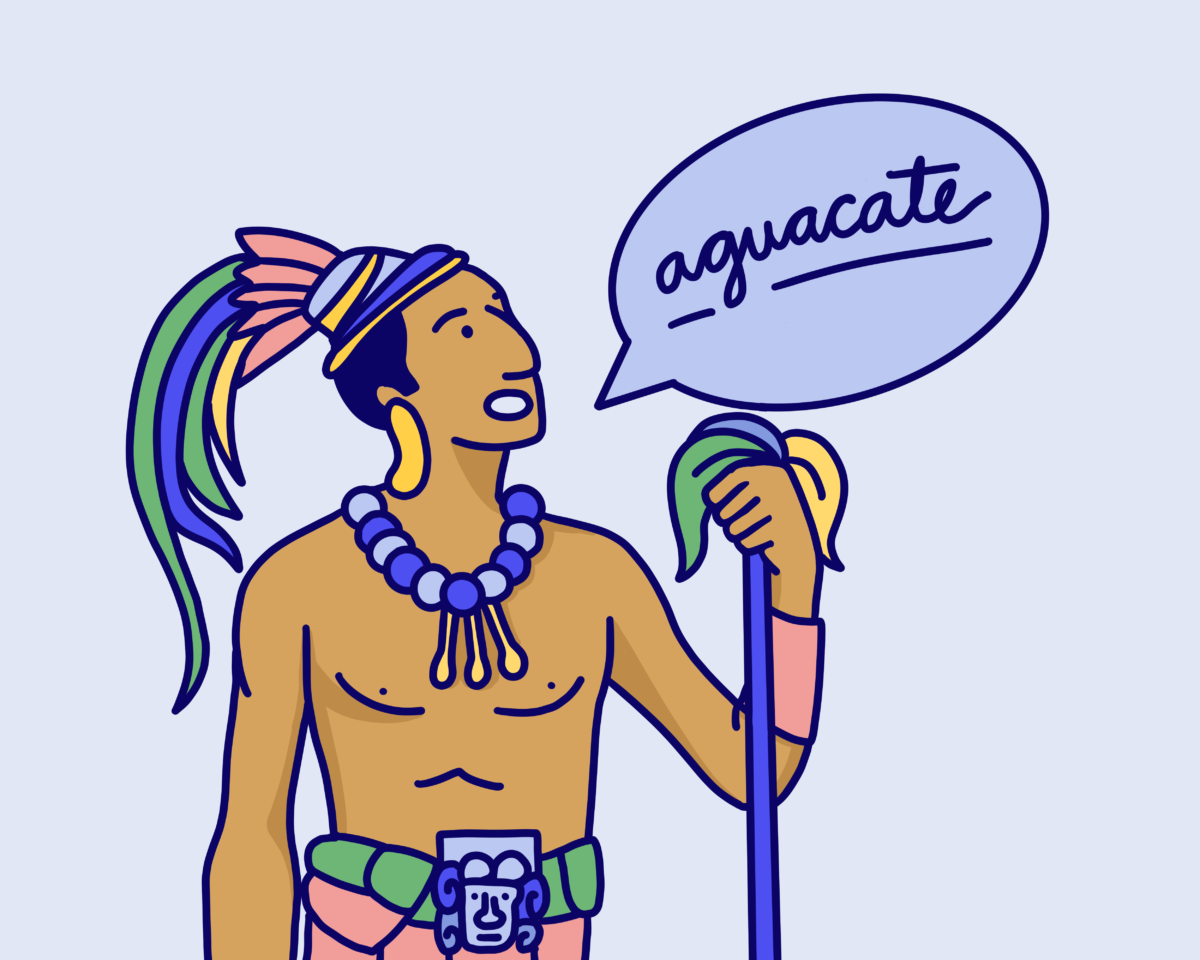
    Como bonus track te compartimos dos palabras del Náhuatl que se utilizan en el castellano actual aguacate y apapachar. Aguacate: proviene de ahuacatl que significa testículos. El aguacate tiene este nombre por la particular forma de este fruto. Apapachar: es la acción de apretar o dar amor a otro con el primer impulso. Es muy lindo y es un verbo que se utiliza en el castellano de Latinoamérica para abrazar o para ser más precisos para regalolear con abrazos a otro.

    Ya sabes que siempre puedes consolar a un ser querido con un “nanai” o “apapacharlo” hasta que se sienta mejor. Conoces la influencia del quechua y maya en el castellano actual y puedes usarlo para llevar tu español al siguiente nivel.

    Sigue aprendiendo cada vez más sobre la lengua española y sus diferentes culturas a través de los artículos publicados en nuestro blog.

  • Words from Quechua and Mayan in Spanish

    Words from Quechua and Mayan in Spanish

    Quechua and Mayan are two indigenous languages of Latin America. Quechua is one of the two indigenous languages with the largest number of speakers today (about 14 million, considering all its variants). Mayan or, rather, the Mayan languages currently have nine hundred thousand native speakers of the languages that make up this linguistic family.

    Quechua is the language of the Inca Empire and has more than 500 years of contact with Spanish, so the influence between both languages has been natural. Loanwords happen from Spanish to Quechua and from Quechua to Spanish. Today, we will see some examples of words of Quechua origin that are part of the usual lexicon of Spanish, especially the one spoken in many Latin American countries.

    On the other hand, Mayan is another of the native languages of Latin America that has influenced the Spanish we speak today. Notice, however, that what is currently known as the “Mayan language” is a linguistic family of around 30 different languages spoken in the ancient Mayan territory, which ranges from southeastern Mexico, Guatemala, Belize, Honduras, and El Salvador. These languages, which still live, share specific characteristics but are very different. Among all these, Peninsular Mayan is one of the official languages of Mexico.

    In today’s article, we will see what are some of the words originating from Quechua and Mayan in Spanish:

    The mayisms

    Patatús: in Mayan, it means feigned death, and in current Spanish, it is a colloquial expression used to express astonishment or fainting. For example: con esta noticia me va a dar un patatús [This news is going to give me a patatús].

    Cachito: Is synonymous with a piece, rather a little piece and comes from the onomatopoeia [cach] heard when something breaks. In Mayan, cach means “broken thing” or “that breaks.”

    Cacao: Cacao was “the food of the gods” since the Mayans considered its plant sacred. Today, this food is known throughout the world and is an essential ingredient to produce chocolate.

    Cenote: They are the characteristic wells of Yucatán province, in Mexico. It comes from the Mayan word tz’onot, which means well or cavern with water.

    Cigar: Comes from the Mayan siyar and is a word that has spread to other languages due to the custom of inhaling tobacco made in the form of a roll.

    Quechuisms

    Quechuisms are words of Quechua origin assimilated into Spanish over time. Some linguistic loans remain in Peru, Bolivia, Argentina, Chile, Ecuador, and Colombia. Countries that were part of the Inca Empire. Let’s review some of these:

    Cancha: It comes from the Quechua kancha and means enclosure, like the space intended for specific sports or shows.

    Charqui: Dehydrated and salted meat typical of South America’s Andean and southern regions.

    Chaucha: Currency of low value. Chauchera: in Bolivia and Chile, it is synonymous with a purse.

    Concho: Sediment located at the bottom of a container and used to refer to the last child of a couple. In the case of the last child, the diminutive conchito is more common.

    Mate: Drink made from the leaves and branches of Ilex paraguariensis, the plant itself and the container used to drink it.

    Nanai: caress to soothe pain. The Chilean Academy of Language defines it as “a very tender caress that attempts to soothe pain or sorrow.” It is also used to express tenderness; for example, when one sees a very tender baby, they express “Nanai!”

    Morocho: Comes from the Quechua “muruch’u”, which means “variety of tough corn.” But in Argentina, Bolivia, Paraguay, Peru, and Uruguay, it is an adjective for a person with brown skin and black hair.

    Palta: Peruvians and Chileans call palta to this green and creamy fruit. It is known as aguacate in the rest of the countries in the region.

    Poncho: A coat consisting of a square blanket made of wool or cloth with an opening in the centre.

    Pucho: means leftover. In Argentina, Bolivia, Chile, Colombia, Ecuador, Honduras, Paraguay, Peru, and Uruguay, it refers to a cigarette or its butt.

    Guagua: Boy, girl and infant. Chile, Argentina, Bolivia, Colombia, and Ecuador use it as a synonym for baby.

    Yapa: Is an Andean idiom that refers to a gift or extra addition to a product during a commercial transaction, especially in a popular context.

    As a bonus track, two Nahuatl words used in current Spanish: aguacate and apapachar. Aguacate: It comes from ahuacatl, which means testicles. The avocado has this name because of the shape of this fruit.  Acapachar is the action of squeezing or giving love to another with the first impulse. It is adorable and is a verb used in Latin American Spanish to hug or, to be more precise, to pamper to another.

    Now you know that you can always comfort a loved one with a “nanai” or “apapacharlo” until he or she feels better. You know the influence of Quechua and Mayan in Spanish, and you can use it to take your Spanish to the next level.

    Keep learning more and more about the Spanish language and its different cultures through the articles published on our blog.

  • ¿Por qué existe la letra H en español?

    ¿Por qué existe la letra H en español?

    Para muchos hablantes del castellano, la letra “h” es un gran dolor de cabeza. Bueno, en realidad a la hora de hablar no hay problema, la dificultad está al momento de escribir una letra que no tiene sonido, entonces ¿cuándo y dónde ubicarla? Es una letra tan discreta que muchos han abogado por su eliminación, pero esta reina de imperceptible sonido ha seguido ostentando triunfante un lugar en el alfabeto del español. ¿Es un simple capricho? No. En gramática, por lo general, todo tiene una explicación.

    La letra hache es la octava letra dentro del alfabeto del español. Se pronuncia únicamente cuando va precedida de la letra c, formando el sonido “ch”, el problema está en que en castellano hay más de 2.000 palabras que comienzan con la letra h y una cuantas más que llevan esta letra intercalada. Pero entonces, sino suena ¿por qué la escribimos? ¿Por qué escribir algo que no existe? Una de las razonas es que no siempre fue muda.

    Los orígenes de la h

    Remontémonos a su pasado: los fenicios fueron los primeros en utilizar esta letra y la pronunciaban como una “j” aspirada. De los fenicios pasó a los griegos, quienes la adoptaron con una suave aspiración. Luego, del griego pasó al latín, y aquí el sonido se suavizó aún más. Del latín dio su salto al español, donde en un principio también se pronunciaba como un sonido aspirado, acompañado de una pequeña explosión de aire similar a la pronunciación actual de la “h” aspirada del inglés. Pero el español no sólo hizo uso de palabras del latín que comenzaban con “h”, también se apropió de numerosas palabras latinas que comenzaban con “f”. En un principio dichas palabras también comenzaban con “f” en español, pero con el pasar de los años y dado que, en algunas partes de España, el sonido “f” también se pronunciaba con una aspiración, en el siglo XIV la “f” inicial comenzó a ser sustituida por la “h” inicial. Así ocurrió con farina que pasó a ser harina, el verbo hacer, que en sus comienzos era facer, helecho (que durante la edad media era felecho), humo, que era fumo, hola, que deriva de fola y tantas otras palabras. Dicho cambio también afectó a algunas palabras que tenían la f intercalada, como el caso de búho que proviene de bufo en latín.

    Según los registros de la RAE, hasta mediados del siglo XVI la letra h en español aún se pronunciaba con una aspiración, sobre todo en las palabras que originalmente se escribían con f en latín.

    Ya a partir del siglo XV la tendencia cambió y la hache aspirada comenzó a considerarse un vulgarismo propio de las clases bajas, así que de a poco la h comenzó a silenciarse completamente hasta ser la letra muda que es hoy.

    H: la única letra que no es un sonido, pero es igualmente necesaria

    Hay un dato histórico más que explica la existencia de esta letra y es que antiguamente tanto la letra u como la v se escribían exactamente igual, aunque no se pronunciaban de la misma manera. Por ello, para identificar que el sonido que correspondía era el de la vocal “u” y no el de la consonante “v” se anteponía una h. De esta manera se sabía que huevo debía pronunciarse como “uevo” y no como “vevo” como hubiese sido sino llevase la h por delante.

    Además, la letra h en castellano sirve para diferenciar por escrito palabras homófonas. Es decir, aquellas que se pronuncian igual, pero que tienen significados diferentes. Así podemos diferenciar rápidamente por escrito hola de ola, hojear de ojear, hecho de echo o diferenciar la preposición a por ha del verbo hacer.

    Como has podido ver la h es una letra muda con una gran historia y que aún cumple importantes funciones en el castellano. Es la reina discreta que sólo es posible usar correctamente si se practica leyendo y escribiendo mucho. Ya el sólo hecho de ser la única letra que en castellano ostenta el título de no tener sonido alguno la hace muy especial. Espero que después de conocer su historia te animes a corregir tu ortografía y no olvidar tus haches por aquí ni por allá.

    ¡Y recuerda que si aún tienes problemas con la gramática del castellano iScribo siempre está aquí para ayudarte a mejorar!

  • Why does the letter “h” exist in Spanish?

    Why does the letter “h” exist in Spanish?

    The letter “h” is a big headache for many Spanish speakers. When speaking, there is no problem; the difficulty is when writing a letter with no sound and having certainty about when and where to place it. It is such a discreet letter that many have advocated for its elimination, but this queen of imperceptible sounds has triumphantly held a place in the Spanish alphabet. Is it a simple whim? No. In grammar, everything generally has an explanation.

    The letter h is the eighth letter in the Spanish alphabet. It is pronounced only when preceded by the letter c, forming the sound “ch”. The problem is that more than 2,000 words begin with the letter h in Spanish and a few more have this letter interspersed. But then, if it doesn’t sound, why do we write it? Why write something that doesn’t exist? One of the reasons is that it was not always mute.

    The origins of the “h”

    Let’s go back to its past: the Phoenicians were the first to use this letter and pronounced it as an aspirated “j”. The Phoenicians passed it to the Greeks, who adopted it with a gentle aspiration. Then, it passed into Latin, from Greek, and the sound became even softer.

     From Latin, it made its jump to Spanish, where at first it was also pronounced as an aspirated sound, accompanied by a small explosion of air similar to the current pronunciation of the aspirated “h” in English. But Spanish not only used Latin words that began with “h”, but it also appropriated numerous Latin words that began with “f”. At first, these words also began with “f” in Spanish, but as the years went by and since, in some parts of Spain, the “f” sound was also pronounced with an aspiration, in the 14th century, the “f” initial began to be replaced by the initial “h”. This is what happened with farina, which became harina (flour), the verb hacer (to do), which in its beginnings was facer, helecho (fern)(which during the Middle Ages was felecho), humo (smoke), which was fumo, hola (hello), which derives from fola and many other words. This change also affected some words that had the f interspersed, such as the case of búho (owl), which comes from bufo in Latin.

    According to the RAE records, until the mid-16th century, the letter h in Spanish was still pronounced with an aspiration, especially in words initially written with f in Latin.

    Starting in the 15th century, the trend changed, and the aspirated h began to be considered a vulgarism typical of the lower classes, so little by little, the h began to be silenced entirely until it became the silent letter that it is today.

    H: the only letter that is not a sound but is equally necessary

    One more historical fact explains the existence of this letter: in the past, both the letters u and v were written precisely the same, although they were not pronounced in the same way. Therefore, to identify that the corresponding sound was that of the vowel “u” and not that of the consonant “v”, an h was placed before it. In this way, it was known that huevo (egg) should be pronounced as “uevo” and not as “vevo” as it would have been without the h in front.

    Furthermore, the letter h in Spanish differentiates homophonous words in writing. Those that are pronounced the same but have different meanings. Thus, we can quickly differentiate writing hola (hello) from ola (wave), hojear (leaf through) from ojear (to browse), hecho (fact) from echo (he/she drop) or differentiate the preposition a (to) by ha from the verb hacer (to do).

    As you have seen, “H” is a silent letter with a great history that still fulfils essential functions in Spanish. The discreet queen can only be used correctly if you practice reading and writing a lot. The mere fact of being the only letter in Spanish that holds the title of having no sound makes it very special. After knowing its story, I hope you are encouraged to correct your spelling and remember your “Hs” here or there.

    And remember that if you still need help with Spanish grammar, iScribo is always here to help you improve!

  • Las palabras y expresiones más lindas del español

    Las palabras y expresiones más lindas del español

    Después del inglés, el castellano es la segunda lengua más estudiada en el mundo y, aunque es difícil decirlo con precisión, se calcula que tiene unas trecientas mil palabras en su léxico. Si se consideran las combinaciones de éstas y los usos por las distintas variantes del español estamos hablando de una lengua muy rica, donde incluso las conversaciones entre hablantes de distintas variantes del castellano no pueden entenderse tan fácilmente entre sí.

    Hay, además, palabras muy lindas que no tienen una traducción exacta en otras lenguas. Hoy iScribo te invita a ver algunas de ellas y divertirte conociendo parte de las culturas de hispanohablantes a través del uso que hacen de su lengua.

    El hecho de que existan expresiones o palabras sin una traducción precisa no es un fenómeno único del español. Sucede mucho entre distintos idiomas. La razón de esto es que la lengua es la herramienta de comunicación de una comunidad y lo que es importante para una no necesariamente lo es para otras.

    ¿Ser o estar? He ahí el problema

    Los idiomas tienen las palabras que necesitan sus hablantes, ni más ni menos. Por ello, aprender un idioma implica ser consciente de que también se está conociendo la forma de vivir la vida de la cultura que se corresponde con dicha lengua.

    Comencemos por una hermosa distinción entre dos verbos: el ser y el estar. En castellano, a diferencia del inglés entendemos que en la vida se puede ser y se puede estar, y no son la misma cosa. Mientras estar implica ocupar un espacio, o hacerse visible y comprende una propiedad susceptible de cambio, el ser implica de alguna manera dotar de sentido la existencia. El ser trasciende al estar, pues lo dota de sentido. Es la diferencia entre esencia y atributo, un atributo puede cambiar, la esencia, no. Yo soy un ser humano (esencialmente) y estoy viviendo en el planeta tierra, por ejemplo.

    Un uso muy interesante que se da coloquialmente en Chile hace la diferencia entre el dejar ser y dejar estar. Cuando alguien dice me dejé estar quiere decir que no hizo nada debiendo haberlo hecho. Por otro lado, cuando dice me dejé ser se refiere a liberarse, dejarse llevar, algo así como el Let it Be de los Beatles.

    Palabras bonitas sin traducción en otros idiomas

    Las palabras del español de esta selección se relacionan con la cultura alrededor de la comida, dar un paseo y algunas que tienen relación con la noche

    Sobremesa: todos la practican, particularmente los fines de semana. Millones y millones de familias y amigos pasan un gran tiempo en el que se está compartiendo en la mesa después de haber comido, ese grato momento es la sobremesa.

    Provecho: Esta me encanta, además porque tiene algo de controversia; para algunos es de mala educación decirlo, mientras que para otros es un buen deseo. Como sea, tiene algo lindo y es que al decir “provecho” o “buen provecho” uno le está deseando a la persona que está comiendo, o con quien está compartiendo el momento de la comida, que la comida le sea agradable. ¿No es eso un buen sentimiento hacia el otro? Su equivalente en francés es el “bon appetite”.

    Pasemos ahora a la noche: ¿te ha pasado que estás cansado y lo intentas, pero no puedes dormir? Bueno, eso es lo que en español se llama desvelar(se): significa quitar o impedir el sueño o perder el sueño por no poder conciliarlo.

    Trasnochar: ¿eres de las personas que le gusta quedarse despierto hasta tarde? Entonces eres alguien que suele trasnochar. Hay gente que lo hace sólo los fines de semana, cuando sale de fiesta, pero hay quienes viven la vida así porque son más productivos, como sea, con ellos usamos el verbo trasnochar.

    Madrugada: Esta palabra se refiere al momento en que la noche y la mañana se funden en una. Es previo al amanecer y posterior a la noche.

    Estrenar: si uno va al estreno de una película en inglés se utiliza el verbo release, pero en español estrenar se refiere también a utilizar una prenda de ropa por primera vez. Una actividad muy especial para muchas personas. Hoy estrenaré un vestido nuevo.

    Vitrinear: se relaciona un poco con el concepto anterior. Las vitrinas son los escaparates donde las tiendas exponen sus productos. Vitrinear por lo tanto, es el verbo que indica la acción de salir a recorrer los escaparates sin necesariamente tener como fin último la compra. Salgamos a vitrinear es una invitación a salir a visitar tiendas, sin necesariamente comprar. Es más bien una invitación a pasear.

    Aquí viene un bonus track: la vergüenza ajena es un sentimiento muy divertido, no todas las culturas lo tienen, pero creo que la expresión se entiende en sí misma. Es un sentimiento prestado, pues aquí uno no se siente avergonzado por lo que uno hizo, sino que por lo que hizo alguien más. En inglés vendría a ser algo así como to feel embarrassed by someone else, aunque no es exactamente lo mismo, pues con esa frase lo que se está haciendo es racionalizar el sentimiento.

    Ojalá hayas disfrutado de la lectura, sigue visitando el blog de iScribo para seguir conociendo un poco más acerca del mundo que gira alrededor de una lengua tan linda como es el castellano. ¡Aquí te esperamos con más temas de tu interés!

  • The most beautiful words and expressions in Spanish

    The most beautiful words and expressions in Spanish

    Spanish is the second most studied language in the world, and although it is difficult to say precisely, it is estimated that it has about three hundred thousand words in its lexicon. Let’s consider the combinations of these and the uses by the different variants of Spanish. We are talking about a vibrant language, where even conversations between speakers of different variants of Spanish cannot be understood so easily by each other.

    There are also lovely words that have yet to have an exact translation in other languages. Today, iScribo invites you to see some of them and have fun getting to know part of Spanish speakers’ culture through their use of their language.

    The fact that there are expressions or words without a precise translation is not a phenomenon unique to Spanish. It happens a lot between different languages. The reason for this is that language is the communication tool of a community, and what is essential for one is not necessarily crucial for others.

    To be or to be? That is the problem

    Languages have the words their speakers need: no more, no less. Therefore, learning a language implies being aware that you are also learning how to live the life of the culture corresponding to said language.

    Let’s start with a beautiful distinction between ser and estar verbs. In Spanish, unlike English, we understand that in life, you can ser and you can estar, which are not the same thing. While estar implies occupying a space or becoming visible and includes a property susceptible to change, ser suggests some way of giving existence meaning. Ser transcends estar since it gives it meaning. It is the difference between essence and attribute; an attribute can change, but the essence cannot. I am a human being (essentially), and I am living on planet Earth, for example.

    A fascinating use colloquially in Chile makes the difference between dejar ser (letting be) and dejar estar (letting be). When someone tells me dejé estar (I let myself be), he/she means that he/she did not do anything he should have done. On the other hand, when he/she tells me dejé ser (I let myself be), he/she means I freed myself, or I let myself go, something like the Beatles’ Let It Be.

    Beautiful words without translation into other languages

    The Spanish words in this selection are related to the culture around food and taking a walk, and some are linked to the night.

    Sobremesa: everyone practices it, particularly on weekends. Millions and millions of families and friends spend a great time sharing at the table after eating. That pleasant moment is the after-dinner meal.

    Provecho: I love this one, also because it has some controversy. For some, it is not polite to say it, while for others, it is a good wish. Anyway, there is something nice about it: by saying “provecho” or “buen provecho”, you are wishing the person who is eating, or with whom you are sharing the meal, that the meal will be pleasant. Isn’t that a good feeling towards each other? Its equivalent in French is “bon appetite”.

    Now let’s move on to the night: has it happened to you that you are tired and try but can’t sleep? Well, that is what in Spanish is called desvelar(se): it means to prevent sleep or to lose sleep due to the inability to fall asleep.

    Trasnochar: Are you one of those who likes to stay late? So, you are someone who usually stays up late. Some people do it only on the weekends when they go out to party, but some live a life that way because they are more productive; anyway, with them, we use the verb to stay up late.

    Madrugada: refers to the moment when night and morning merge. It is before dawn and after night.

    Estrenar: If one goes to the premiere of a movie in English, the verb release is used, but in Spanish, estrenar also refers to wearing a piece of clothing for the first time. It is a particular activity for many people: hoy estrenaré un vestido nuevo.

    Vitrinear: It is somewhat related to the previous concept. Vitrinas are the shop windows where stores display their products. Vitrinear, therefore, is the verb that indicates going out to browse the windows without necessarily having the goal of purchasing. Let’s go window shopping is an invitation to go out and visit stores without necessarily buying. It is more of an invitation to walk.

    Here comes a bonus track: la vergüenza ajena is amusing. Not all cultures have it, but the expression is understood. It is a borrowed feeling because here, one does not feel ashamed for what one did but instead for what someone else did. In English, it would be something like feeling embarrassed by someone else, although it is not precisely the same since, with that phrase, what is being done is rationalising the feeling.

    I hope you enjoyed reading this article. Keep visiting the iScribo blog to learn more about the world that revolves around a language as beautiful as Spanish. Here we are, waiting for you with more topics of interest!

Want more Spanish tips?

Get them direct to your inbox

Sign up for tips and tricks to perfect your Spanish writing skills. You’ll be writing like a native in no time.

Free Trial until 30 September 2021: Our subscription programme does not start until 1 October 2021. So, as long as you provide us with a feedback you can use our site for free until noon 30 September 2021 (GMT)