
Author: Maria del Mar Pérez

  • 8 Top Jobs Where Knowing Spanish is Helpful

    8 Top Jobs Where Knowing Spanish is Helpful

    Jobs where knowing Spanish is helpful are the order of the day.

    In addition to specific training in a particular area, fluency in more than one language is an additional benefit over other candidates.

    Not only in Spanish-speaking countries, but you can also work with the Spanish language practically all over the world. As one of the most widely spoken languages in the world, Spanish language jobs are at the top of the list of the most in-demand positions in the job market.

    Read this iScribo article to discover jobs using Spanish on daily basis.

    1. Journalism

    Whether you are a Spanish speaker or a foreigner with a good knowledge of Spanish, this language opens doors to work in the journalism sector in a large number of countries. Whether as an editor in a foreign subsidiary or as a reporter, Spanish is almost always a prerequisite for working in the news industry.

    From America to Asia to Europe, journalism has a job for anyone who speaks Spanish!

    2. Education Sector

    Spanish is taught as a second language in many countries, such as France, Brazil and Côte d’Ivoire.

    Speaking more than one language gives you an advantage over other professionals who only speak one language. Imagine if you teach science in a school in Germany but speak Spanish like a native speaker, you will have a better chance of getting and keeping that job than someone else.

    Not only as a teacher but also in the secretarial work in schools, languages such as Spanish are valued.

    3. Legal Assistant

    The legal and defence sector is on the rise in languages such as Spanish.

    We live in an increasingly cosmopolitan world, where migratory flows are increasing every year.

    Helping Spanish speakers living or travelling abroad with their legal matters is always an option.

    Conversely, if you are a Spanish speaker, you can also help foreigners living or travelling to your country.

    The possibilities in this sector are endless: from lawyers to advisors to counsellors.

    4. Health Professionals

    Almost the same as the previous option. A cosmopolitan world increases the proliferation of migratory flows. Being able to assist anyone in a language you and other people understand increases your chances of being hired.

    Nursing, medicine or interpreting are the most in-demand jobs for a Spanish speaker or a person who is fluent in Spanish.

    5. Social Worker

    Another profession you can benefit from in a world in constant movement.

    Guiding foreigners arriving in your country as a Spanish speaker or leading with your experience as a foreigner who speaks and writes perfect Spanish are the best opportunities for this job.

    In addition, helping others with their problems and finding a solution on a personal and intimate level is a bonus.

    6. Service Sector

    As a foreigner who is fluent in Spanish in a Spanish-speaking country, this is your best option.

    Jobs in hotel reception, as a tour guide or in the hospitality industry are the most sought-after. If you are fluent in Spanish, you are in luck, as it is more than likely that you will find your place in the tertiary sector.

    As a Spanish speaker, you know that you will always have a place in the service sector both at home and abroad.

    7. Customer Service

    Phone calls are today’s problem solvers. In an increasingly digitised era, face-to-face contact is being replaced by phone calls and video calls.

    Working in an after-sales service or in customer service, in general, is one of the sectors in which Spaniards and people with great Spanish knowledge are most in demand.

    8. The Business World

    Whether in a bank or a multinational company, communication in Spanish with both clients and other companies is more than necessary.

    Fluency in Spanish will open the doors of local companies in practically any position in which you have good training and experience. Imagine if the company is large, your opportunities multiply.

    Improve your Spanish and Increase your Chances

    No matter how you look at it, speaking Spanish is an asset. If you are looking for jobs where knowing Spanish is helpful, prepare your CV along with your cover letter and go for it!

    iScribo will help you proofread your CV and suggest improvements to make you stand out from the crowd. Why not give it a try?

  • 9 Ideas Para Mejorar tu Vocabulario en Español

    9 Ideas Para Mejorar tu Vocabulario en Español

    El español es un idioma muy rico, de hecho, el diccionario de la RAE cuenta con unas cien mil palabras. Un habitante normal y corriente utiliza unas trescientas al día y una persona con un nivel de cultura alto puede utilizar hasta quinientas.

    Aprender vocabulario en español que se considere más avanzado es complicado hasta para los hispanohablantes.

    iScribo te enseña hoy algunos trucos sobre cómo aprender vocabulario en español para mejorar la forma en la que te expresas. Todos son compatibles, es más, verás que puedes utilizarlos todos a la vez y que se complementan. Cuantas más ideas pongas en práctica, más aprenderás.

    1. Identifica tu nivel y tus necesidades

    Antes de saber cómo aprender vocabulario en español, necesitas tener claro el nivel que tienes en este idioma. Si eres hispanohablante, ya sabes que cuentas con un nivel de español alto, pero esto no siempre implica que tu nivel cultural sea alto también. Son cosas muy diferentes y no tiene nada de malo que tu nivel sea inferior al de otras personas, ¡piensa que nadie nace sabiendo!

    Si el español no es tu idioma materno, piensa si ya sabes expresarte con frases básicas o complejas. Este será tu punto de partida.

    Una vez que sepas tu nivel, piensa en qué tipo de conversaciones te cuesta más expresarte o de qué área de conocimiento necesitas aprender vocabulario.

    ¿Necesitas saber más vocabulario médico o por el contrario necesitas aprender vocabulario de economía?

    2. Practica a diario

    Si eres hispanohablante, abre el diccionario y comienza a aprender palabras que sean nuevas para ti. Después, utilízalas en frases a diario para que tu cerebro se acostumbre a ellas.

    Si el español es tu segunda lengua, practica a diario con amigos o compañeros y, cuando aprendas una palabra nueva, repítela una y otra vez en frases y contextos diferentes.

    3. Lee y apunta

    Leer en español ayuda mucho a aprender vocabulario nuevo en este idioma. Intenta descifrar la palabra que desconozcas por su contexto y si no, búscala en el diccionario. Una vez que sepas lo que significa, anótala en una libreta que designes para este propósito o bien en las notas de tu móvil.

    Vuelve al paso dos y repite estas palabras nuevas una y otra vez hasta que te familiarices con ellas y salgan en las conversaciones o textos en español de forma natural.

    4. Busca sinónimos y antónimos

    El truco de la libreta viene de perlas para apuntar los sinónimos de las palabras y crear asociaciones con ellas.

    Utiliza una palabra que conozcas y anota sinónimos alrededor de ella para que interiorices el diagrama y puedas utilizarlas. Así crearás tu propio mapa conceptual de sinónimos.

    Por ejemplo:

                                                    BOLSA (economía)

    MERCADO DE VALORES               MERCADO BURSÁTIL         MERCADO DE ACCIONES    

    5. Juega

    Gracias a la tecnología y a la inteligencia artificial podemos beneficiarnos de nuestros dispositivos móviles para expandir nuestras fronteras. Existen cantidad de juegos individuales o multijugador sobre vocabulario. Descárgate alguno de ellos y reta algún amigo a un juego de formación de palabras.

    Si eres más tradicional, puedes utilizar el periódico cada día para hacer crucigramas, se aprende muchísimo de estos.

    6. Estudia el origen de las palabras

    Saber de dónde vienen las palabras nos ayuda a hacer asociaciones con las mismas. Si tu idioma materno es uno diferente al español, encontrarás divertido el comparar ambas palabras en los dos idiomas.

    La etimología también te ayuda a crear familias de palabras para expandir tu vocabulario. Escucha, lee, busca, aprende y practica.

    7. Utiliza ideas claves

    Cuando veas o busques adrede una palabra que no conozcas, inventa tres frases con ella y luego, sin mirar tus frases, reescríbelas.

    Compara lo que has apuntado en un inicio con lo que has escrito de segundas. Te aseguro que además de reírte, aprenderás.

    8. La curiosidad NO mató al gato

    Ten predisposición a aprender todo el tiempo. Una actitud positiva de iniciativa ayudará a que tus sentidos estén en alerta y absorban palabras nuevas con mayor facilidad.

    9. Utiliza iScribo

    El uso a diario de un corrector de ortografía y gramática nos da la ventaja de aprender en tiempo real. No hay nada como escribir en español y que una herramienta entrenada por un equipo de lingüistas te ayude a mejorar.

    No solo la función de sinónimos y antónimos, sino que mejora la fraseología y te sugiere palabras que encajan mejor en cada contexto. ¡Pruébala y cuéntanos!

    Practicar es aprender

    Puedes seguir todos estos consejos pero yo tengo claro qué es lo más importante de todo: nunca temas equivocarte. Aprender vocabulario en español significa salir de la zona de confort y eso siempre da un poco de respeto.

    Utiliza las palabras y equivócate, cometer errores es lo que nos enseña en la vida. Utiliza iScribo para que te corrija a la vez que escribes y así aprendas e identifiques lo que más te cuesta aprender en español. Cuéntanos, ¿conoces más trucos para mejorar tu vocabulario en español?

  • 9 Ideas to Increase your Spanish Vocabulary

    9 Ideas to Increase your Spanish Vocabulary

    Spanish is a very rich language; the RAE dictionary has about one hundred thousand words, of which an ordinary person uses about three hundred a day. A person with a high level of culture can use up to five hundred.

    Learning vocabulary in Spanish that is considered more advanced is complicated even for Spanish speakers.

    If you wonder what is the best way to improve your Spanish vocabulary, iScribo shows you some tips. They are all compatible, in fact, you will see that you can use them all at the same time and that they complement each other. The more ideas you put into practice, the more you will learn.

    1. Identify your Level and Needs

    Before you know how to learn Spanish vocabulary, you need to be clear about your level of Spanish. If you are a Spanish speaker, you already know that you have a high level, but this does not always imply that your cultural level is also high. They are very different things and there is nothing wrong if your level is lower than other people’s – nobody is born knowing!

    If Spanish is not your mother tongue, think about whether you already know how to express yourself in basic or complex sentences. This will be your starting point.

    Once you know your level, think about what kind of conversations you find it hard to express yourself in or what area of knowledge you need to learn vocabulary for.

    Do you need to know more medical vocabulary, or do you need to learn economic vocabulary?

    2. Practise Every Day

    If you are a Spanish speaker, open the dictionary and start learning words that are new to you. Then use them in sentences every day to get your brain used to them.

    If Spanish is your second language, practise daily with friends or colleagues and, when you learn a new word, repeat it over and over again in different sentences and contexts.

    3. Read and Write

    Reading in Spanish helps a lot to learn new vocabulary in this language. Try to decipher the word you don’t know from its context and if not, look it up in the dictionary. Once you know what it means, write it down in a notebook you designate for this purpose or in your mobile phone notes.

    Go back to step two and repeat these new words over and over again until you are familiar with them, and they come up naturally in Spanish conversations or texts.

    4. Look up Synonyms and Antonyms

    The notebook trick comes in handy for writing down synonyms of words and creating associations with them.

    Use a word you know and write down synonyms around it so that you internalise the diagram and can use them. This way you will create your own concept map of synonyms.

    For example:

                                                    BOLSA (economy)

    MERCADO DE VALORES               MERCADO BURSÁTIL         MERCADO DE ACCIONES

    5. Play Games

    Thanks to technology and artificial intelligence we can take advantage of our mobile devices to expand our frontiers. There are plenty of single and multiplayer vocabulary games. Download one of them and challenge a friend to a game of word formation.

    If you are more traditional, you can use the newspaper every day to do crossword puzzles, you can learn a lot from these.

    6. Study the Origin of Words

    Knowing where words come from helps you make associations with them. If your native language is different from Spanish, you will find it fun to compare words in the two languages.

    Etymology also helps you create word families to expand your vocabulary. Listen, read, look it up, learn and practise.

    7. Use Key Ideas

    When you see or deliberately look up a word you don’t know, make up three sentences with it and then, without looking at your sentences, rewrite them.

    Compare what you have written down at the beginning with what you have written at the end. I assure you that as well as laughing, you will learn.

    8. Curiosity DIDN’T Killed the Cat

    Be willing to learn all the time. A positive attitude of the initiative will help your senses to be alert and absorb new words more easily.

    9. Use iScribo

    The daily use of a spelling and grammar checker gives you the advantage of learning in real time. There is nothing like writing in Spanish and having a tool trained by a team of linguists to help you improve.

    Not only do the synonyms and antonyms function help, but it also improves phraseology and suggests words that fit better in each context. Try it and tell us about it!

    To Practise is to Learn!

    You can follow all these tips but I am sure about what is most important of all: never be afraid to make mistakes. Learning Spanish vocabulary means getting out of your comfort zone and that always gives you a bit of respect.

    Use the words and make mistakes, this is what teaches you in life. Use iScribo to correct your document as you write so that you can learn and identify what you find most difficult to learn in Spanish. Tell us, do you know any other tips to improve your Spanish vocabulary?

  • Cómo Evitar Anglicismos Innecesarios en Español

    Cómo Evitar Anglicismos Innecesarios en Español

    ¿Sabes qué son los anglicismos? Según la RAE, un anglicismo es una palabra que se usa en inglés para expresar algo que podríamos decir en español. Por ejemplo: start-up en lugar de empresa emergente o remake en lugar de nueva versión o adaptación.

    Hoy en día, el uso de anglicismos está sobrevalorado y es, a menudo, totalmente innecesario en el discurso en español debido a que existen equivalentes en nuestra lengua. El uso indiscriminado de voces inglesas no solo impide la buena comprensión del texto, sino que altera el funcionamiento del español como lengua.

    Anglicismos aceptados por la RAE

    La RAE ha aceptado e incluido en el vocabulario español anglicismos que, por su uso, han pasado a formar parte de la lengua. Esto se produce por la misma evolución del idioma:

    Chat, plotear o candidatar.

    Al llegar al trabajo, enciendo el chat para hablar con mis compañeros.

    Hay otros anglicismos que han adaptado su grafía, como rugbi, pero que mucha gente sigue escribiendo rugby. En este caso, la RAE nos recomienda escribir la palabra en cursiva cuando, por cualquier motivo, se decida no adaptar.

    La RAE permite los anglicismos si el texto requiere su uso por las características que posee; por ejemplo, si está relacionado con la mercadotecnia o si es un texto técnico muy específico, el anglicismo irá en cursiva.

    Siempre que podamos, intentaremos introducir la palabra equivalente en español y el anglicismo entre paréntesis para que, a partir de ese momento, en el texto solo se incluya el equivalente en español.

    Por ejemplo:

    En Inglaterra, las escuelas se enfrentan a una ola de noticias falsas (fake news) que perjudican al alumnado. Estas noticias falsas están a la orden del día.

    Cómo evitar los anglicismos de moda

    Cuando te venga a la cabeza una palabra en inglés al hablar en español, párate y piensa si es necesario utilizar ese anglicismo. Seguro que existe una palabra en español que puedes emplear en su lugar.

    Por ejemplo, vamos a proponerte algunas alternativas en esta frase:

    NO:

    ¡Me has hecho un spoiler del final del capítulo!

    SÍ:

    ¡Me has fastidiado/destripado el final del capítulo!

    Si no te viene ninguna palabra en español, puedes utilizar las consultas rápida de la RAE o de la Fundéu, te aseguro que alguien ha tenido la misma duda antes que tú y la solución la tienes a tan solo un clic.

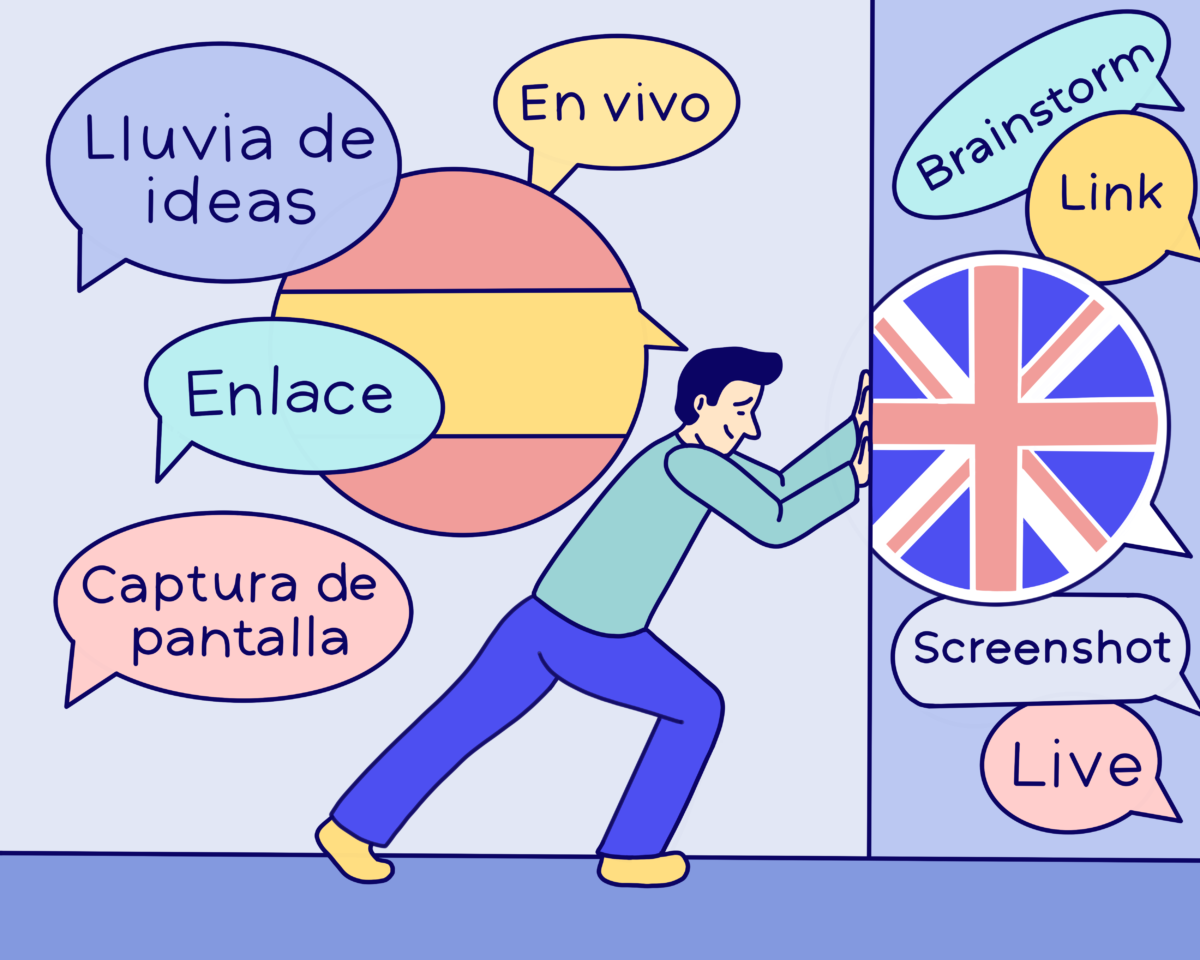
    Haz una lluvia de ideas (y no un brainstorming)

    El cerebro es un músculo y, como todo músculo, hay que entrenarlo para que se acostumbre y haga las tareas sin esfuerzo. Con esta teoría puedes evitar el uso de anglicismos innecesarios en el español.

    Habla, párate, piensa y utiliza palabras alternativas. Si estas escribiendo, recuerda que iScribo detecta los anglicismos innecesarios y te propone alternativas para que puedas escribir un español correcto. Esta también es una manera infalible de aprender. ¿Qué anglicismos de moda crees que están más integrados en el español? Cuéntanos en los comentarios.

  • Best Way to Avoid Anglicisms in the Spanish Language

    Best Way to Avoid Anglicisms in the Spanish Language

    Do you know what anglicisms are? According to the RAE, an anglicism in Spanish is a word that is used in English to express something that could be said in Spanish. For example, start-up instead of ‘empresa emergente’ or remake instead of ‘nueva versión’or ‘adaptación’.

    Nowadays, the use of anglicisms is overrated and is often totally unnecessary in Spanish discourse because there are equivalents in this language. The indiscriminate use of English voices not only impedes the proper understanding of the text but also alters the functioning of Spanish as a language.

    Anglicisms Accepted by the Spanish RAE

    The RAE has accepted and included in the Spanish vocabulary anglicisms that, due to their use, have become part of the language. This is due to the evolution of the language itself:

    Chat, plotear or candidatar

    Al llegar al trabajo, enciendo el chat para hablar con mis compañeros.

    (When I get to work, I sign in the chat to talk to my colleagues.)

    There are other anglicisms that have adapted their spelling, such as ‘rugbi’, but many people still write rugby. In this case, the RAE recommends that we write the word in italics when, for whatever reason, we decide not to adapt it.

    The RAE allows anglicisms if the text requires their use due to its characteristics, for example if it is related to marketing or if it is a very specific technical text, the anglicism will be in italics.

    Whenever possible, we will try to introduce the equivalent word in English and the anglicism in brackets so that, from then on, only the English equivalent is included in the text.

    For example:

    En Inglaterra, las escuelas se enfrentan a una ola de noticias falsas (fake news) que perjudican al alumnado. Estas noticias falsas están a la orden del día.

    (In England, schools are facing a wave of fake news that harms pupils. Fake news is the order of the day.)

    How to Avoid Anglicisms

    When an English word comes to mind when speaking in Spanish, stop and think about whether it is necessary to use that anglicism. Surely there is a Spanish word you can use instead.

    For example, we are going to suggest some alternatives in this sentence:

    NO:

    ¡Me has hecho un spoiler del final del capítulo!

    (You gave me a spoiler for the end of the chapter!)

    YES:

    ¡Me has fastidiado/destripado el final del capítulo!

    If you can’t find any Spanish words, you can use the quick search tool of the RAE or the Fundéu, I assure you that someone else has had the same doubt before you and the solution is just a click away.

    Make a ‘lluvia de ideas’ (and not a brainstorming)

    The brain is a muscle and, like any muscle, you have to train it to get used to it and to make it perform tasks effortlessly. With this theory, you can avoid the use of unnecessary anglicisms in Spanish.

    Speak, stop, think and use alternative words. If you are writing, remember that iScribo detects unnecessary anglicisms and suggests alternatives so that you can write correct Spanish. This is also a sure-fire way to learn. Which anglicisms in the Spanish language do you think are more integrated into this language? Tell us in the comments.

  • La Navidad en Países Hispanohablantes del Mundo

    La Navidad en Países Hispanohablantes del Mundo

    Las celebraciones de Navidad en Latinoamérica se parecen mucho a las festividades españolas. En toda la cultura hispanohablante se venera la tradición católica y se ensalza el vínculo familiar.

    La familia es lo que nos une a todos en la época más mágica del mundo. Desde las reuniones de Nochebuena hasta las comidas del día veinticinco de diciembre, compartir estos días del año con tus seres queridos es la parte central de la Navidad en países hispanohablantes del mundo.

    iScribo te cuenta las tradiciones más curiosas de los países hispanohablantes para que aprendas un poco de la cultura navideña en torno a los países en los que se habla español.

    Las nueve posadas y el «Año Viejo»

    Las celebraciones de Navidad arrancan en México el 16 de diciembre con «las nueve posadas», que representan a María y a José buscando cobijo. Cuando llegan a la novena y definitiva posada, que es una casa familiar que se ofrece para la ocasión, se celebra una gran fiesta. Las celebraciones por Navidad se alargan hasta el mes de enero.

    En Argentina, la tradición más curiosa destaca en las ciudades de Buenos Aires y La Plata, en donde los habitantes hacen un muñeco enorme de paja, el «Año Viejo», que queman al llegar el año nuevo. El espectáculo de fuego se puede apreciar desde una larga distancia. Otros países como Perú, Uruguay, Chile, Cuba, Panamá, Nicaragua y Honduras también celebran esta tradición con modificaciones.

    Además, es tradición colgar un calcetín rojo en la puerta de cada casa del país.

    La Inmaculada Concepción y el «Día de las Velitas»

    En España, la Navidad arranca el ocho de diciembre con la festividad de la Inmaculada Concepción. Los españoles decoran entonces sus casas con el famoso belén navideño.

    En el norte del país, es tradición comer cordero en Nochebuena y en el sur, pavo. Eso sí, muy bien acompañados de innumerables entrantes y ricos pescados y mariscos; sin olvidar los mantecados y turrones para el postre.

    La Navidad culmina con la cabalgata de Reyes el seis de enero.

    Podemos afirmar uno de los alumbrados navideños más espectaculares del mundo es el de Medellín, en Colombia. En este bello país, la Navidad se inicia con el «Día de las Velitas» el siete de diciembre.

    En Medellín adornan el río con luces y en Barranquilla y Bogotá adornan las calles con velas.

    Durante todas las festividades, los colombianos comerán el famoso ajiaco de Santa Fe, lechona, natilla y buñuelos.

    El «Espíritu de la Navidad» y el «Avenidazo»

    Venezuela comienza a festejar la Navidad el 4 de diciembre con Santa Bárbara, cuando se decoran los hogares. Destaca el «Espíritu de la Navidad» el veintiuno de diciembre, cuando los venezolanos encienden velas y beben té, que significa prosperidad para el año que va a comenzar.

    Destaca la cena de Nochebuena con hallacas, dulce lechosa y platos a base de cerdo en una noche que culmina con la entrega de regalos.

    En Costa Rica destaca la tradición que se celebra cada año, este entre el cinco y el once de diciembre, que marca el inicio de la Navidad. Se trata de «El Avenidazo», en donde se cierra al tráfico la Avenida Central de San José para que la gente pueda dedicar esos días a las compras de Navidad. La tradición incluye comidas en los restaurantes de la avenida y el lanzamiento de confeti cada dos por tres al ritmo de conciertos. Los costarricenses lanzan el confeti como simulación de la navideña nieve. ¡Claro! En Costa Rica la temperatura es muy suave, hasta en estas festividades.

    Viaja esta Navidad y escribe en español

    En iScribo nos encanta el idioma español, por eso, además de ayudarte a escribir mejor con nuestro corrector ortográfico y gramatical, te acercamos la cultura en torno a la lengua. La Navidad en países hispanohablantes del mundo es tan especial como diversa. Es más, el cómo se celebra la Navidad en España traspasa fronteras y ha llevado la mismísima cabalgata de Reyes del seis de enero hasta el centro de Nueva York. Las tradiciones de Navidad en Latinoamérica son famosas y dignas de ver, su belleza es única e irrepetible. ¿Conoces más tradiciones de Navidad en Latinoamérica? Cuéntanos en los comentarios tu experiencia y conozcamos juntos y poco más de la diversidad del español por el mundo.

  • Celebrating Christmas in Spanish-Speaking Countries

    Celebrating Christmas in Spanish-Speaking Countries

    Christmas in Spanish-speaking countries mixes local tradition with the Catholic tradition, but the family bond is the most important part of the celebrations.

    Family is what binds us all together during the most magical time of the year while celebrating Christmas in Spanish-speaking countries. From Christmas Eve gatherings to meals on the twenty-fifth of December, sharing these days of the year with your loved ones is at the heart of Christmas in Spanish-speaking countries around the world.

    iScribo tells you the most curious traditions of some countries so that you can learn a bit of Christmas culture around our favourite language.

    The nueve posadas and the Año Viejo

    Christmas celebrations start in Mexico on 16 December with “las nueve posadas” (the nine inns), which represent Mary and Joseph seeking shelter. When they reach the ninth and final posada, which is a family home offered for the occasion, a great feast is held. The Christmas celebrations last until January.

    In Argentina, the most curious tradition is in the cities of Buenos Aires and La Plata, where the inhabitants make a huge straw doll, the “Año Viejo”, which they burn in the New Year. The spectacle of fire can be seen from a long distance. Other countries such as Peru, Uruguay, Chile, Cuba, Panama, Nicaragua and Honduras also celebrate this tradition with modifications.

    It is also a tradition to hang a red sock on the door of every house in the country.

    The Inmaculada Concepción and the Día de las Velitas

    In Spain, Christmas starts on the eighth of December with the feast of the Immaculate Conception. The Spanish decorate their homes with the famous nativity scene.

    In the north of the country, it is traditional to eat lamb on Christmas Eve, and in the south, turkey. This is accompanied by countless starters and delicious fish and seafood, not forgetting mantecados and turrones for dessert.

    Christmas culminates with the Three Kings parade on the 6th of January.

    One of the most spectacular Christmas lights in the world is the one in Medellín, Colombia. In this beautiful country, Christmas begins with the “Día de las Velitas” (Day of the Candles) on the 7th of December.

    In Medellín, Colombians decorate the river with lights and in Barranquilla and Bogotá they decorate the streets with candles.

    During all the festivities, Colombians will eat the famous ajiaco from Santa Fe, lechona, natilla and buñuelos.

    The Espíritu de la Navidad and the Avenidazo

    Venezuela begins celebrating Christmas on 4 December with Santa Barbara, when homes are decorated. The “Espíritu de la Navidad” (Spirit of Christmas) is celebrated on 21 December, when Venezuelans light candles and drink tea, signifying prosperity for the year to come.

    Don’t miss out the Christmas Eve dinner with hallacas, dulce lechosa and pork-based dishes on a night that culminates in the giving of gifts.

    In Costa Rica, there is a tradition that is celebrated every year, this one between the fifth and eleventh of December, which marks the beginning of Christmas. This is “El Avenidazo“, where the Central Avenue of San José is closed to traffic so that people can dedicate those days to Christmas shopping. The tradition includes meals in the restaurants along the avenue and the throwing of confetti every other day to the rhythm of concerts. Costa Ricans throw the confetti to simulate the Christmas snow. Of course! In Costa Rica the temperature is very mild, even on these holidays.

    Travel this Christmas and Write in Spanish

    At iScribo we love the Spanish language, that’s why, as well as helping you to write better with our spelling and grammar checker, we bring you closer to the culture surrounding the language. Christmas in Spanish-speaking countries around the world is as special as it is diverse. What’s more, the way Christmas is celebrated in Spain crosses borders and has brought the very same Three Kings parade on January 6th to the centre of New York. Christmas traditions in Latin America are famous and worth seeing, their beauty is unique and unrepeatable. Do you know more Christmas traditions in Latin America? Tell us in the comments about your experience and let’s get to know together a little bit more about the diversity of Spanish around the world.

  • 6 Frases Navideñas en Español para estas Fiestas

    6 Frases Navideñas en Español para estas Fiestas

    No hay nada que suene mejor que hablar como un hispanohablante. Todos los idiomas contienen una gran variedad de expresiones y dichos típicos que enriquecen su cultura.

    Utiliza la creatividad este año cuando escribas las tarjetas con frases navideñas para tus seres queridos. No solo se trata de usar frases navideñas bonitas y cortas, sino que hay que darle rienda suelta a la imaginación para sorprender a la gente que más queremos.

    Desde tarjetas navideñas hasta vídeos personalizados, felicita las navidades a lo grande este año.

    Las más divertidas

    1. ¡Te ha tocado el gordo!

    «El gordo» es el mayor premio de la lotería de Navidad. Precisamente por esto, esta expresión navideña se utiliza de forma cotidiana durante todo el año para expresar que alguien ha tenido un golpe de suerte.

    ¿Te vas a Santander esta Navidad? ¡Caray! ¡Te ha tocado el gordo!

    2. ¡Es más viejo que los Reyes Magos!

    Los Reyes Magos llegan cada 6 de enero para traer regalos a los niños. En España, es muy frecuente encontrarte con el debate eterno de si las familias prefieren recibir la visita de Papá Noel o la de los Reyes Magos. Pues bien, parece que siguen ganando los Reyes porque llevan más años en la cultura española.

    Precisamente, utilizamos esta expresión para decir que una persona es bastante antigua y no se adapta a los tiempos modernos.

    ¡No seas más viejo que los Reyes Magos y deja que el niño llegue tarde a casa!

    Las clásicas

    3. Que todos tus deseos se hagan realidad

    Por Navidad, todos queremos desearle lo mejor a nuestros seres queridos, por tanto, cuando se acercan estas fechas queremos que sepan que nos acordamos de ellos y que queremos que les vaya lo mejor posible.

    Esta es una de las numerosas formas en que puedes felicitarles las fiestas a tus seres más cercanos.

    Por esta Navidad espero que todos tus deseos se hagan realidad.

    4. ¡Feliz Navidad y próspero Año Nuevo!

    Dice la leyenda que hay que felicitarle el Año Nuevo a toda la gente que tenemos a nuestro alrededor para tener buena suerte. Sea verdad o no, siempre es bonito desearle lo mejor a los demás; son pequeñas acciones que enriquecen el alma y nos hace estar más felices. Aprovecha casa instante para expresarle a tus seres queridos lo que significan para ti.

    ¡Os deseo a todos feliz Navidad y un próspero Año Nuevo! ¡Brindemos!

    Las gastronómicas

    5. Salir rodando

    Supongo que esto es lo más normal en todas las culturas, pero en Navidad, comemos mucho. Siempre hay multitud de comidas de Navidad, como las del trabajo, las de la familia y la de los amigos. Algunos incluso aprovechan la ocasión para salir a cenar con los compañeros del colegio de cuando eran pequeños o con la gente del gimnasio.

    Pues bien, de tanto comer, subimos de peso y figurativamente, nos ponemos más gordos y redondos, de ahí a que podamos «salir rodando». Es muy común en España y Argentina.

    Como sigamos comiendo así, vamos a salir rodando.

    6. Te van a dar las uvas

    En España y en muchos países Latinoamericanos, como en Venezuela, Perú, Argentina y México, es tradición tomarse doce uvas al llegar la medianoche del 31 de diciembre. Se trata de la mejor manera de despedir el año que se va y darle la bienvenida al año que entra.

    Estas doce campanadas suenan cada muy pocos segundos, por lo que hay que comerse las uvas muy rápido con cada campanada. Esta expresión por tanto significa «llegar tarde».

    ¿Has comprado ya los regalos de Navidad? ¡Al final te van a dar las uvas!

    Disfruta de la Navidad y escribe en español

    La Navidad es periodo para estar con la familia y los seres queridos, pero también es el momento de pensar en nuevos retos e ilusionarse con propósitos nuevos por el cambio de año.

    iScribo está aquí para ayudarte a mejorar tu español escrito y que puedas progresar con el nivel que tienes en este idioma. Ya seas hablante nativo o estás en fase de aprendizaje, todo el mundo comete errores al escribir. Prueba nuestra herramienta estas Navidades y descubre su magia. ¡Que no te den las uvas! ¿Nos cuentas qué expresiones conoces y cuál es la forma en la que felicitas la Navidad a tus seres queridos? Déjanos un comentario y compartamos el periodo más mágico del año.

  • 6 Christmas Phrases in Spanish for the Festivities

    6 Christmas Phrases in Spanish for the Festivities

    Nothing sounds better than speaking like a Spanish speaker. All languages contain a wide variety of expressions and sayings that enrich their culture.

    Be creative this year when wishing a Happy Christmas and a Happy New Year in Spanish. It’s not just about using Christmas phrases in Spanish, but also about using your imagination to surprise the people you love the most.

    From Christmas cards to personalised videos, use a proper Spanish Christmas vocabulary this year.

    The Funniest Ones

    1. ¡Te ha tocado el gordo!

    “El gordo” is the biggest prize in the Spanish Christmas lottery. Precisely because of this, this Christmas expression is used on a daily basis throughout the year to express that someone has had a stroke of luck.

    ¿Te vas a Santander esta Navidad? ¡Caray! ¡Te ha tocado el gordo!

    (Are you going to Santander this Christmas? Blimey, you’ve hit the jackpot!)

    2. ¡Es más viejo que los Reyes Magos!

    The Three Kings arrive every January 6th to bring presents to children. In Spain, it is very common to find the eternal debate about whether families prefer to receive a visit from Father Christmas or the Three Kings. Well, it seems that the Three Kings continue to win because they have been in the Spanish culture for more years.

    Precisely, we use this expression to say that a person is quite old and does not adapt to modern times.

    ¡No seas más viejo que los Reyes Magos y deja que el niño llegue tarde a casa!

    (Don’t be a traditionalist and let the child come home late!)

    The Classic Ones

    3. Que todos tus deseos se hagan realidad

    At Christmas, we all want to wish our loved ones the very best, so as the holidays approach we want them to know that we remember them and that we want them to do well.

    This is one of the many ways you can wish your nearest and dearest a Merry Christmas.

    Por esta Navidad espero que todos tus deseos se hagan realidad.

    (For this Christmas I hope all your wishes come true.)

    4. ¡Feliz Navidad y próspero Año Nuevo!

    Legend has it that you should wish everyone around you New Year’s greetings for good luck. Whether it is true or not, it is always nice to wish the best to others; they are small actions that enrich the soul and make us happier. Take the opportunity to express to your loved ones what they mean to you.

    ¡Os deseo a todos feliz Navidad y un próspero Año Nuevo! ¡Brindemos!

    (I wish you all a Merry Christmas and a Happy New Year! Let’s toast!)

    The Gastronomic Ones

    5. Salir rodando

    I suppose this is the most normal thing in all cultures, but at Christmas, we eat a lot. There is always a multitude of Christmas meals, such as work, family and friends. Some even take the opportunity to go out for dinner with school friends from when they were at high school or with people from the gym.

    Well, from eating so much, we put on weight and figuratively, we get fatter and rounder, hence we can “roll around”. This is very common in Spain and Argentina.

    Como sigamos comiendo así, vamos a salir rodando.

    (If we keep eating like this, we’ll be full as a tick.)

    6. Te van a dar las uvas

    In Spain and in many Latin American countries, such as Venezuela, Peru, Argentina and Mexico, it is a tradition to eat twelve grapes at midnight on 31st December. It is the best way to say goodbye to the year that is leaving and welcome the new year.

    These twelve chimes sound every few seconds, so you have to eat the grapes very quickly with each chime. This expression, therefore, means “to be late”.

    ¿Has comprado ya los regalos de Navidad? ¡Al final te van a dar las uvas!

    (Have you bought your Christmas presents yet? You’re going to be late!)

    Enjoy Christmas and write in Spanish

    Christmas is a time to be with family and loved ones, but it is also a time to think about new challenges and get excited about new year’s resolutions.

    iScribo is here to help you improve your written Spanish so that you can progress with the level you have in this language. Whether you are a native speaker or a beginner, everyone makes mistakes when writing. Try our tool this Christmas and discover its magic, ¡que no te den las uvas! Can you tell us what expressions you know and how you wish your loved ones a Merry Christmas? Leave us a comment and let’s share the most magical time of the year.

Want more Spanish tips?

Get them direct to your inbox

Sign up for tips and tricks to perfect your Spanish writing skills. You’ll be writing like a native in no time.

Free Trial until 30 September 2021: Our subscription programme does not start until 1 October 2021. So, as long as you provide us with a feedback you can use our site for free until noon 30 September 2021 (GMT)